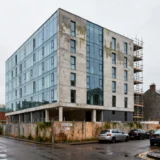
The builder in Berkshire, England, wanted to save money by not paying his Section 106 payments – these are contributions triggered when a development reaches certain stages.
Although other developers in the UK have stopped building, most notably Bellway's 900 home Prospect Place scheme in Cardiff, Crosby's 102 home Potato Wharf development in Castlefield, Manchester, and the Lumiere scheme in Leeds by KW Linfoot, this is the first reported case of walls being torn down to save money.
'I have been informed about a developer in our borough who has removed already built external walls for homes so they wouldn't count towards section 106 payments,' said Paul Bettison, the leader of Bracknell Forest council and chair of the environment board at the Local Government Association.
He said it is an unfortunate sign of the times and he could understand why the developer, who has not been named, took this course of action. 'Developers are taking significant risks. I'd rather they found a way of conserving cash than went bust,' he added.
Richard Capie, director of policy and practice at the Chartered Institute of Housing, said he had also heard of the practice. 'The problem is getting people to actually build. We're learning that, while section 106 can deliver great benefits for communities in a rising market, when times aren't so good reliance on it is not such a good thing,' he said.