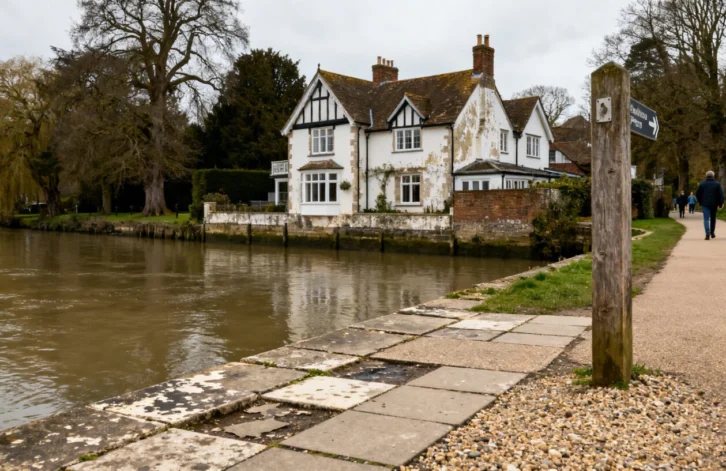
A First-tier Tribunal has ruled that a property crossed by a public towpath does not qualify as ‘entirely residential’ for Stamp Duty Land Tax purposes, potentially affecting how HMRC classifies similar properties.
The case involved a £4.5 million Thames-side property purchase in Marlow, Buckinghamshire. HMRC initially applied residential SDLT rates, charging £586,250 in tax. The buyers contested this assessment, arguing the Thames Path running through the land meant the purchase should be classified as mixed-use, with a tax liability of £214,500.
Tribunal decision
The tribunal described the path as a “busy section of a busy public right of way” and determined that the level of public access meant it did not form part of the property’s grounds. The judge ruled: “It follows that the property does not consist entirely of residential property and therefore the appeal succeeds.”
Under SDLT regulations, higher residential rates apply only when a transaction consists entirely of residential property.
Tim Stovold, Head of Tax at accountancy firm Moore Kingston Smith, told the Telegraph: “This is another in a series of cases where a taxpayer was able to argue that their purchase included a house and something else.”
He noted: “This argument is often used when a storage facility or a paddock is acquired with a property, which can be a more marginal case. But a towpath, similar to a public footpath, was readily accepted by the tribunal as not part of the grounds of the house.”
Implications for property transactions
While the ruling does not set a binding precedent, it may strengthen arguments that land subject to public rights of way should not be considered part of a dwelling’s grounds for SDLT purposes. The decision could affect properties with similar characteristics, particularly those with public footpaths or towpaths.
HMRC has stated it is “considering the judgement” and may appeal the decision. The tax authority has increased its scrutiny of SDLT classifications, with investigations doubling in recent years.