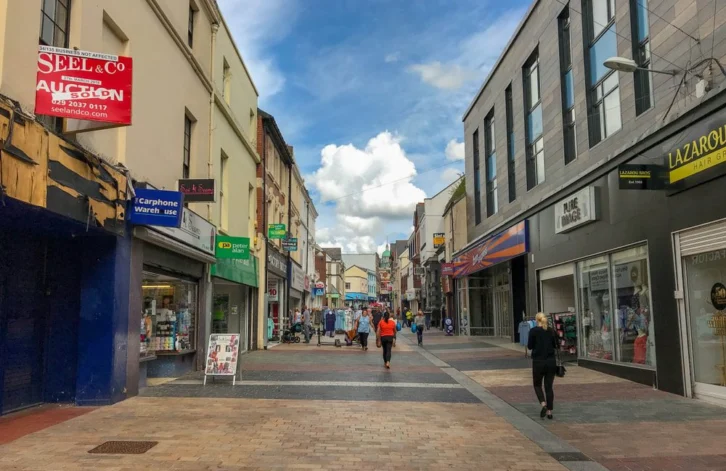
For generations, the UK high street was the centre of daily life. It was where people shopped, socialised, and supported local businesses that often stayed within families for decades. However, over the past 20 years, the traditional high street has faced a dramatic decline. Empty shopfronts, struggling independent retailers, and reduced footfall have become common sights in towns and cities across the country.
While the decline cannot be attributed to a single cause, several key factors have combined to reshape the retail landscape and challenge the survival of high street businesses.
Increased Business Rates
One of the most commonly cited pressures on high street retailers is the cost of business rates. These taxes, based on the value of commercial properties, can place a significant financial burden on physical stores.
For small independent retailers operating on tight margins, business rates often represent one of their highest fixed costs. Unlike online retailers that may operate from large distribution centres in lower-value locations, high street shops are typically located in prime areas where property values, and therefore business rates, are high.
As a result, many smaller businesses struggle to remain profitable, especially when faced with fluctuating consumer spending and rising operational costs such as energy and wages.
Online Convenience
The rapid rise of online shopping has fundamentally changed consumer behaviour. Companies like Amazon have made it possible for consumers to purchase almost anything with just a few clicks and have it delivered directly to their door.
Online shopping offers convenience, competitive pricing, and a wider selection of products than most physical stores can provide. Customers no longer need to travel into town, search for parking, or carry purchases home. Among the shops that have suffered as a consequence of the digital revolution are high street bookies, with many players now choosing to access the latest games at sites like Slots UK.
This shift has significantly reduced foot traffic on high streets, leaving many retailers struggling to compete with the efficiency and scale of e-commerce platforms.
Larger Corporations Phasing Out Independent Businesses
Another factor contributing to the decline is the growing dominance of large retail chains and multinational corporations. When these companies expand into town centres, they often bring strong brand recognition, significant marketing budgets, and the ability to negotiate lower supply costs.
While chain stores can attract customers, their presence can also push out smaller independent businesses that cannot compete on price or scale. Over time, this reduces the diversity and character of the high street.
Ironically, many of these same large corporations have also begun shifting their own operations online or reducing their physical presence. Well-known retailers such as Debenhams and Topshop have either closed stores or significantly downsized in recent years, leaving large vacant premises behind.
Lack Of Private Investment
In many towns, the high street has suffered from a lack of sustained private investment. Property owners may be reluctant to refurbish ageing buildings, while investors often see greater returns in other sectors such as residential property or large retail parks.
Without investment, high streets can begin to appear neglected or outdated, discouraging new businesses from moving in and reducing the attractiveness of the area to shoppers.
Infrastructure, modern retail spaces, and mixed-use developments require long-term investment strategies, but these have not always materialised in struggling town centres.
Reduced Focus On Community
Historically, the high street served as a social hub where people interacted with local shopkeepers and neighbours. Independent businesses often played an important role in shaping community identity.
As online shopping and out-of-town retail centres have grown, this sense of community has weakened. Many people now view shopping as a purely transactional activity rather than a social experience.
The loss of local cafes, bookshops, butchers, and other independent retailers removes opportunities for community engagement and reduces the unique character that once defined many high streets.
A Complex Challenge
The decline of the UK high street is not the result of a single issue but rather a combination of economic pressures, technological change, and evolving consumer habits. Rising business rates, the convenience of online shopping, the dominance of large corporations, limited private investment, and the erosion of community-focused retail have all played a role.
However, many towns are beginning to rethink the purpose of their high streets. Rather than focusing purely on retail, future high streets may evolve into mixed-use spaces that combine shopping with entertainment, dining, services, and community activities.
Whether these efforts succeed will depend on cooperation between local governments, businesses, investors, and communities, all working together to reimagine what the high street can be in the modern era.