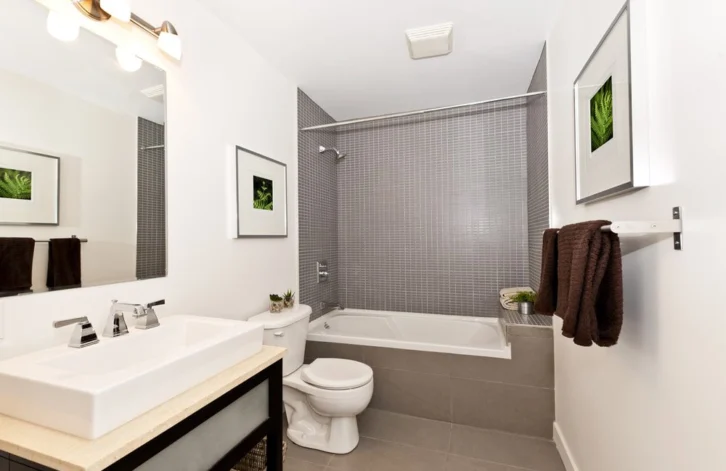
When you’re renovating a compact bathroom, the smaller design decisions often shape the room more than the larger ones. Choosing the right quadrant shower tray, for example, can influence how much floor space remains usable and how balanced the layout feels once everything is installed.
In many homes, the layout is already partly fixed before the renovation even begins. The toilet, basin and doorway usually stay where they are because moving plumbing adds complexity and cost. That means the rest of the design has to work around those existing positions.
When each element fits comfortably within that structure, the bathroom tends to feel calm and organised rather than cramped. Buyers notice this straight away when they step into the room.
Choosing a Shower Layout That Works With the Room
The shower enclosure is usually the largest feature in a small bathroom, so its position has a major influence on how the rest of the layout functions.
Positioning the Shower
In most homes, placing the shower in a corner works best. Two existing walls already define the enclosure space, which simplifies plumbing connections and helps installers fit the enclosure more easily.
Corner installations also keep the centre of the room clearer. When the main walking space remains open, the bathroom feels easier to move around, even if the overall floor area is limited.
Choosing the Right Door Style
Door design also affects how the room functions day to day. Pivot doors swing outward, creating a wide entry into the shower but requiring clear floor space in front of the enclosure.
Sliding doors work differently because the panels move sideways along the frame. This often suits compact bathrooms better because the door does not interfere with nearby fixtures or circulation space.
Why Curved Shower Trays Often Suit Compact Bathrooms
Once the corner position of the shower is established, the shape of the tray becomes an important design decision. In smaller bathrooms, even subtle changes to the enclosure footprint can make the layout feel more comfortable.
How a Curved Shower Tray Improves Circulation
A curved shower tray softens the front edge of the enclosure. Instead of introducing another sharp corner into the room, the rounded edge allows movement around the front of the shower to feel more natural.
This small adjustment can make the circulation space in front of the enclosure feel noticeably more open.
A round shower tray works in a similar way, though quadrant designs tend to integrate more easily with straight wall lines because they sit neatly within a corner.
Why Many Bathrooms Use Quadrant Shower Trays
This is why quadrant shower trays are often used in compact bathrooms. The tray fits comfortably into a corner while the curved front edge keeps the centre of the room clearer.
When planning a renovation, choosing fittings that conform to standard UK tray dimensions usually makes installation easier. Many homeowners might consider buying quadrant shower trays from Heat and Plumb because the range includes the common footprints and radius options that installers already work with regularly.
That familiarity helps when confirming measurements, selecting an enclosure and making sure the tray will sit neatly against tiled walls.
Because of this, a quadrant shower tray often becomes one of the first shower decisions homeowners finalise during planning.
Using Glass Enclosures to Keep the Room Feeling Open
In a small bathroom, visual openness can make a surprising difference to how spacious the room feels.
Heavy frames or opaque panels tend to divide the room visually, which can make the layout feel more confined.
Frameless and Semi-Frameless Designs
Glass enclosures with minimal framing allow light to travel more freely through the space. When your eye can move easily across the room, the bathroom often appears larger than its actual dimensions.
Clear glass usually works best in compact bathrooms because it preserves those sightlines. And, when paired with a quadrant shower tray, the curved enclosure and transparent panels help the shower feel integrated rather than dominant within the room.
Adding Storage Without Making the Room Feel Crowded
Even the smallest bathrooms still need practical storage for everyday items. The challenge is introducing storage without using valuable floor space.
Using Vertical Storage
Wall-mounted cabinets and shelving can help keep the room organised while preserving circulation space.
Vertical storage is particularly useful in compact bathrooms because it allows you to store toiletries and towels without crowding the layout. Whilst shelving above the toilet or beside the mirror can provide more storage than people often expect, it also keeps the floor area clear.
Lighting Choices That Help a Small Bathroom Feel Larger
Lighting plays a bigger role in small bathrooms than many people realise.
Having poor lighting can create shadows around the edges of the room, which tends to emphasise the limited size of the space.
Layering Light Sources
Using multiple light sources rather than relying on a single ceiling fixture usually produces better results.
Ceiling lighting provides general illumination, while mirror lights brighten the basin area where most daily routines take place.
When light is distributed evenly throughout the room, the entire space tends to feel more open.
Finishes That Appeal to Future Buyers
If you’re renovating with resale in mind, it usually helps to choose finishes that appeal to a wide range of buyers.
Neutral tiles, chrome fixtures and simple cabinetry tend to work well because they look clean and practical.
Keeping the Design Timeless
That does not mean the bathroom should feel plain. Instead, it means choosing materials that feel balanced and durable rather than following short-lived trends.
A bathroom that looks easy to maintain often leaves a stronger impression during viewings.
Designing a Bathroom That Feels Easy to Use
Ultimately, the most marketable small bathrooms are the ones that feel comfortable to use every day.
When the shower fits naturally within the layout, circulation space remains clear, and the fixtures feel proportionate to the room.
In many compact bathrooms, a quadrant shower tray helps achieve that balance because it softens tight corners while keeping the shower neatly positioned within the layout.
Small design decisions often make the biggest difference. When the layout works naturally and the fixtures feel integrated, the bathroom simply feels easier to live with.