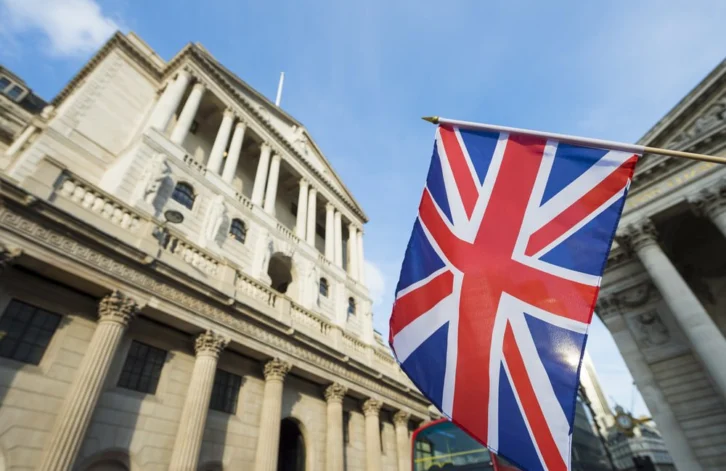
As the Middle East conflict escalated this week, borrowing costs rose and central bankers deliberated their next move.
By Tom Bill, head of UK residential research at Knight Frank
Super Thursday may need a rebrand after the events of yesterday.
The name derived from the long list of central banks making rate decisions, which included Japan, the UK, Sweden, Switzerland and the ECB. Like the US Federal Reserve on Wednesday, they all held.
The reason things felt more sub-optimal than super is the escalation of the Middle East conflict to include attacks on key energy infrastructure plants.
Energy prices jumped after sites in Iran, Qatar and Saudi Arabia came under fire. Brent crude traded more than 5% higher compared to Wednesday after having increased more than 50% over the last month.
If the effective closure of the Strait of Hormuz has been a problem, this could be far more consequential.
That all depends on how much the oil and gas attacks escalate. The economic war being waged has put US President Donald Trump under intense pressure ahead of US mid-term elections later this year, as we discussed on a recent episode of Housing Unpacked.
That said, a prolonged period of attacks on energy infrastructure is not in Iran’s economic or political interests either.
Not So Super
It was certainly not a super day for UK mortgage lenders. The five-year interest rate swap peaked above 4.5% yesterday after closing at 4.25% on Wednesday, which will keep demand and house prices in check.
That said, any volatility is dwarfed by what took place during the mini-Budget shock of 2022 when mortgage rates jumped from around 2% to 6%. For context, five-year fixed-rate mortgages have broadly risen to 4% from 3.5% in recent weeks.
“Initially the reaction from lenders felt similar to the mini-Budget, with products withdrawn, rates pulled and loans re-priced every day or two,” said Simon Gammon, head of Knight Frank Finance. “Unlike the mini-Budget, that reaction been less pronounced and not coupled with fast-rising inflation, so while things are fast-moving, they could settle more quickly.”
There is certainly less inflationary pressure from wage growth compared to period that followed the conflict between Ukraine and Russia, which began in February 2022.
The month after the war in eastern Europe started, UK wage growth was 7.3%, which compares to a figure of 3.9% recorded yesterday. Lower wage growth will mitigate any second-round effects from higher inflation driven by energy prices.
However, several hours after yesterday’s labour market data was released, the Bank of England struck a more hawkish tone than expected by saying it was “ready to act as necessary to ensure that CPI inflation remains on track to meet the 2% target in the medium term.”
Could that mean it raises Bank Rate this year? Two hikes are currently priced in by financial markets, which compares to an expectation of two cuts just a few weeks ago.
Painful recent memories of high inflation could influence its thinking despite the slack in the jobs market, said Michael Brown, a research strategist at financial broker Pepperstone.
“The economy is in a much different place to the last energy shock four years ago, with the labour market considerably more fragile,” he said. “There is a notable divergence of views within the MPC, but raising rates feels like it would be a huge policy mistake.”