New calculations by luxury flooring specialist Designer Carpet show that landlords who upgrade from budget to quality bedroom carpet recover the cost of doing so in as little as eleven days of avoided vacancy. In London, the cost can be recouped in less than a week.
The analysis draws on void period and rental income data, which found that the average cost of a void period in England reached £1,077 in December 2025, up 13.8% year-on-year. At that rate, each day a property sits empty costs a landlord £46.83 in lost income. In London, where average monthly rents sit above £2,240, the daily figure rises to around £75.
Designer Carpet used those figures to calculate the breakeven point for a bedroom carpet upgrade in a typical two-bedroom rental covering approximately 20 square metres of bedroom floor area. Replacing budget synthetic carpet with a quality wool or natural fibre alternative adds roughly £500 to the upfront refurbishment cost. At England’s average daily void rate, that premium is recovered in full after eleven days of faster letting. In London, the breakeven falls to fewer than seven days.
Ben Herbert, a spokesman for Designer Carpet, says the numbers challenge a widespread assumption in the buy-to-let sector.
“Most landlords see carpet as a cost to be minimised rather than a factor in how quickly a property lets. But when you put the void data alongside the actual cost of a flooring upgrade, the maths shifts fairly quickly. In most parts of England, you only need to let ten or eleven days faster to cover the difference in full, and that’s before you account for the fact that better carpet tends to last longer and needs replacing less often.”
The Hard Floor Default
The standard advice for rental properties has moved firmly towards hard flooring in recent years. LVT and laminate are durable, easy to clean, and hold up well across multiple tenancies. For kitchens, bathrooms, hallways, and high-traffic areas, that logic is hard to argue with.
The issue is that many landlords apply it uniformly across the whole property, including bedrooms and living rooms. A prospective tenant viewing a bedroom is not primarily asking whether the floor is easy to wipe down. They are deciding whether the room feels like somewhere they want to sleep.
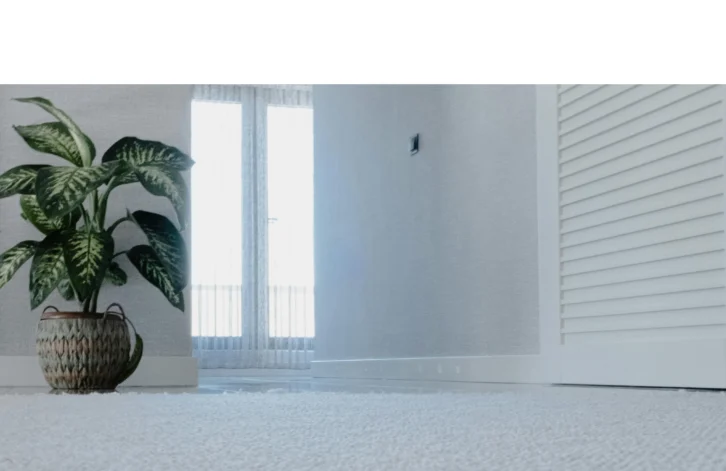
Property management research consistently finds that rentals which feel warm and well-presented let faster. Carpet contributes to that in ways hard flooring doesn’t: it softens sound, retains heat, and signals a level of care. One industry guide notes directly that carpeted bedrooms can both accelerate the letting process and support a higher monthly rent.
The Cheap Carpet Problem
Recognising that carpet has a place in bedrooms, many landlords go for the cheapest available option. But that approach carries its own costs.
Synthetic carpets in a rental property typically last two to three years with moderate wear and tear. Each replacement means materials, fitting, and in many cases additional vacancy time while the work is carried out. Do that twice over a five-year period and the apparent saving on the initial purchase looks considerably less attractive, particularly when the worn carpet at the start of a tenancy is doing nothing to accelerate the let.
“There’s a false economy in buying cheap carpet for rental bedrooms,” Herbert says. “A decent wool or natural fibre option, bought at the right price, will comfortably outlast a budget synthetic and presents far better at viewings. The cost gap between the two is often much smaller than landlords assume, especially if you know where to source it.”
Getting the Balance Right
None of this is an argument for carpet throughout. Hard floors belong in the rooms where durability genuinely matters, like hallways, kitchens, and bathrooms. The case here is for a more considered approach to the rooms where tenants make emotional decisions.
With void costs still rising and the data clearly pointing towards further lengthening in several regions, the financial case for flooring that helps a property let faster is getting stronger.