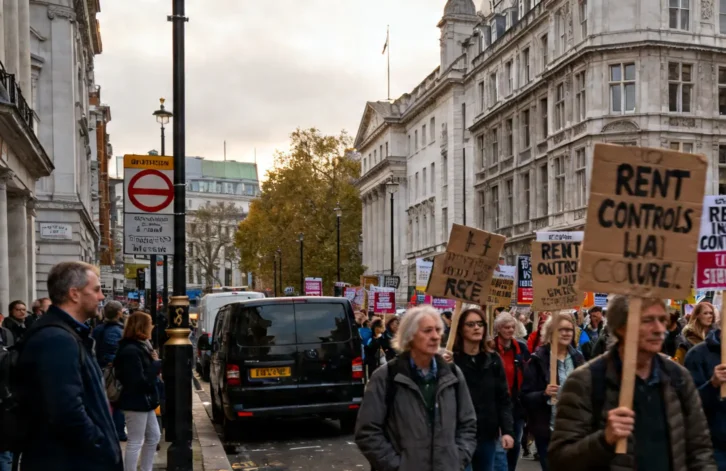
Thousands of demonstrators gathered in central London on Saturday for a national housing protest organised by tenant groups, trade unions and campaign organisations calling for rent controls and expanded council housing programmes.
The march began at Soho Square and proceeded through central London, with speeches from former Labour leader Jeremy Corbyn and MP Zarah Sultana.
Demands for policy intervention
Elyem Chej, spokesperson for the London Renters Union, told the Socialist Worker: “Soaring rents are pushing us into poverty and out of our neighbourhoods while corporate giants build luxury flats we can’t afford.”
Chej criticised the current government’s approach, stating: “Keir Starmer’s Government is making the housing crisis worse, cosying up to private developers and selling out our communities.”
MP Zarah Sultana addressed the rally, questioning government spending priorities: “Why is there always money to destroy homes abroad while we fail to build them here?”
Market implications
The demonstration reflects growing tenant activism in the UK rental market, where affordability pressures have intensified. The calls for rent controls come as the sector continues to adjust to regulatory changes, with some letting agents calling for the return of Section 21 evictions amid concerns about landlord rights.
Tanya, an activist with Homes 4 All and Southwark Housing and Planning Emergency, linked housing policy to broader political issues, criticising both Reform UK and the current government’s approach.
A spokesperson from Trans Action for Housing Justice stated: “Yes, we need rent controls, we need council housing. But that is a fraction of what we deserve. These are the first demands in a fight for our freedom.”
The march comes at a time when the property sector faces multiple pressures, with some franchise groups reporting profit declines and ongoing debates about tenant protections versus landlord viability.
The demonstration represents one of the largest recent gatherings focused specifically on rental market regulation, signalling continued political pressure on housing policy as affordability remains a contentious issue across the UK.