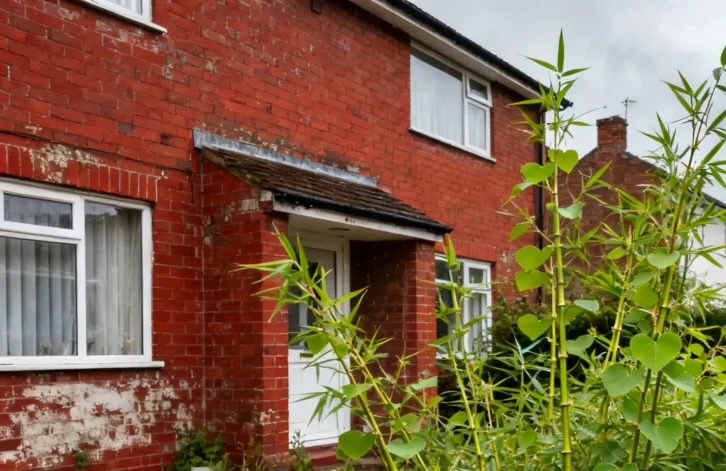
Japanese knotweed is reducing UK property values by an estimated £21.4 billion, according to new research from invasive plant removal specialist Environet.
The study indicates that more than 1.5 million homes are affected by the invasive species, with property values typically declining by approximately 5%, equivalent to £13,500 per property.
Legal disclosure requirements impact sales
Property sellers are legally obligated to disclose the presence of Japanese knotweed during transactions. The research found that 32% of potential buyers would not purchase an affected property under any circumstances, whilst a similar proportion would consider it only with a professional treatment plan in place and a price reduction.
Emily Grant, Director at Environet, said: “Despite the fact knotweed is now much better understood than it was a few years ago, and many people are now quite pragmatic about it, a significant proportion of buyers still won’t touch an affected property under any circumstances.”
The ongoing stigma associated with Japanese knotweed continues to affect saleability even after infestations have been treated, according to the research. This market resistance has implications for housing supply in affected areas.
Treatment approaches shifting
Grant noted a trend amongst sellers towards permanent removal methods: “We’re seeing a clear shift towards permanent removal of knotweed, particularly where a sale is on the horizon and the priority is preserving value and avoiding delays.”
Sellers are increasingly opting for excavation, which removes the root system entirely, rather than herbicide treatment that controls but does not fully eradicate the plant. This shift reflects concerns about maintaining property values and avoiding transaction delays.
Andrew McColl, Chairman at the Residential Property Surveyors Association (RPSA), highlighted the financial burden: “Discovering Japanese knotweed can have significant financial implications, as removal and management plans are often costly and may require anywhere from five to ten years to fully implement.”
The findings underscore the continuing impact of Japanese knotweed on the UK property market, with both immediate valuation effects and longer-term implications for property transactions. The data suggests that despite increased awareness and treatment options, buyer reluctance remains a significant factor affecting properties with current or historical knotweed presence.