For generations, the British property dream followed a familiar path: Buy a starter home, climb the ladder, move somewhere bigger.
But for a growing number of homeowners in 2026, that journey is starting to run in reverse.
Instead of stretching for an extra bedroom, bigger garden or bigger kitchen, more buyers are actively choosing smaller properties. Some are looking to reduce mortgage costs, others are freeing up cash for retirement, many simply cannot justify the cost of upsizing in today’s market.
The result is quietly creating an unexpected winner elsewhere in the property sector…
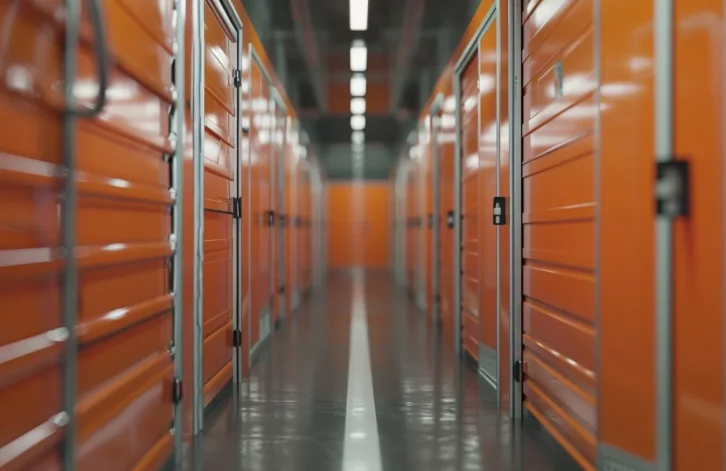
Britain’s self-storage industry is now worth £1.3 billion a year, according to the Self Storage Association UK, with more than 67.5 million square feet of storage space spread across the country. What was once a service largely associated with house moves and renovations is increasingly becoming a long-term solution for homeowners who have less space at home.
Britain’s property ladder is changing
For decades, the assumption was that homeowners would naturally move into bigger properties as their circumstances improved.
Yet rising mortgage rates, higher moving costs and increasingly expensive housing markets have made that progression harder than ever.
Industry figures suggest that around 37% of UK homebuyers are now downsizers, a figure that would have seemed surprising just a decade ago.
And while downsizing may reduce monthly outgoings, it often creates a practical problem.
People might be moving into smaller homes, but they’re not necessarily owning less. Years of accumulated furniture, family keepsakes, sports equipment, seasonal items and children’s belongings still need somewhere to go.
For many homeowners, storage has become the compromise between affordability and space.
The cost of space is no longer just measured in square feet
Housing affordability is influencing more decisions than simply where people live. Increasingly, it is shaping how people use their homes.
The latest Self Storage Association data shows that 27% of customers use storage because they have run out of room at home, while 10% say they use it specifically to create more living space.
That shift reflects how modern homes are being used. Spare bedrooms have become home offices. Dining rooms have become playrooms. Garages have become gyms.
At the same time, many newer homes offer less storage space than previous generations of housing. The result is that storage is no longer just something people need during a move. For many households, it has become an extension of the home itself.
Why downsizers are increasingly turning to storage
The trend is particularly visible among older homeowners.
Many are leaving bigger family homes after children have moved out, but they are understandably reluctant to part with decades’ worth of possessions overnight.
Storage offers breathing space. Rather than making rushed decisions about furniture, family heirlooms or sentimental belongings, homeowners can move first and decide later.
Research from the Self Storage Association found that 5% of customers now use storage specifically because they have downsized, while moving home remains the largest driver overall, accounting for 34% of domestic storage use.
With more than 1.5 million households estimated to be somewhere within the moving process during 2026, that demand is unlikely to disappear anytime soon.
The housing squeeze is creating new habits
A spokesperson at The Box Co., a company that offers storage-by-the-box solutions, says there has been a noticeable change in how customers think about storage.
“A few years ago, most people viewed storage as something temporary. They were moving house, renovating or dealing with a major life event.
“Today, we’re increasingly seeing customers who just don’t have enough space at home. Some have downsized, while others have decided not to move to a bigger property because of the costs involved.
“When the difference between a two-bedroom and three-bedroom property can mean hundreds of pounds more on a mortgage every month, many people are deciding that flexible storage is the more sensible option.”
A property story that goes beyond storage
The growth of Britain’s self-storage industry is often presented as a retail or logistics success story. In reality, it may be telling us something far more interesting about the housing market.
For many households, the decision to use storage is no longer about convenience, it’s about affordability.
As property costs continue to change the way people buy, move and live, the demand for extra space is not disappearing, it is simply moving somewhere else.
And that helps explain why an industry built around spare boxes and unused furniture has quietly become one of the fastest-growing sectors linked to the UK’s housing market