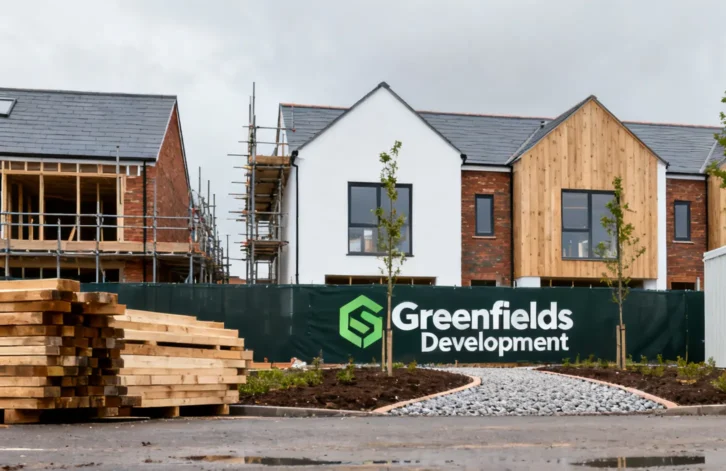
The number of new build housing developments listed for sale has fallen to its lowest level since 2017, according to data from property portal Rightmove.
The figures, which exclude retirement schemes, raise questions about the Government’s target to deliver 1.5 million homes during the current Parliament. Rightmove declined to provide specific numerical data, stating it aimed to highlight the trend rather than absolute figures.
Market implications
The decline in new build listings comes at a time when the housing market faces subdued sales activity, with multiple factors constraining supply and demand.
Colleen Babcock, property expert at Rightmove, said: “Despite the historically high number of available homes for sale, there is still a long-term shortage of affordable homes in the right place. We need more homes to support people at every stage of the moving journey, from first-time buyers to downsizers.”
Steve Mariner, Group Sales and Marketing Director of Barratt Redrow, attributed the decline to “increasing regulatory costs” alongside “low customer confidence, higher borrowing costs and wider economic uncertainty” which are making it harder for first-time buyers to enter the market.
Mariner noted that for the first time in decades, there is no government support scheme to help people in England purchase their first home.
Industry calls for policy intervention
Rightmove has called on the Government to address the issue in the Autumn Budget by removing stamp duty for first-time buyers on both new builds and resale properties. The portal also proposes increased investment in affordable housing and targeted support for first-time buyers.
The challenges facing first-time buyers extend beyond availability, with stamp duty costs deterring homeowners from moving, further constraining market activity.
Nathan Emerson, Chief Executive of Propertymark, said: “Ensuring there is enough housing for a growing population is essential. While ambitious housing targets have been set across the UK, building new homes is only part of the challenge. Thriving communities also need investment in jobs, education, healthcare, transport and policing, alongside robust supply chains, a skilled workforce and a stable economy to keep housing accessible for both buyers and renters equally.”
Outlook
The reduction in new build listings represents a significant constraint on housing supply at a time when government policy is focused on increasing homebuilding. The data suggests developers are scaling back projects amid economic headwinds and regulatory pressures, potentially undermining long-term housing delivery targets.