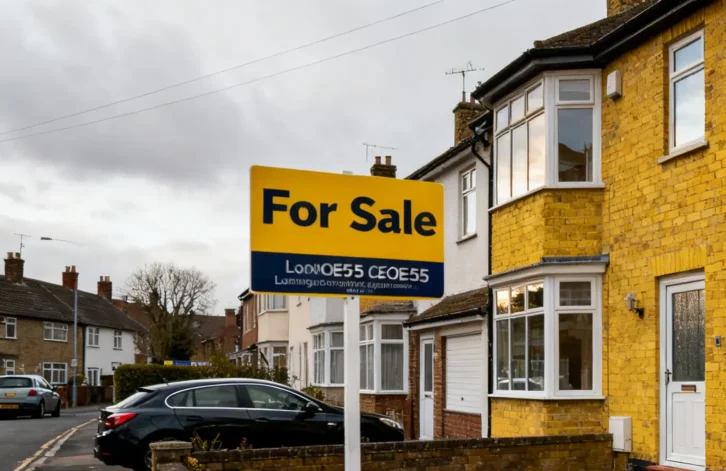
Nearly half of all homes listed for sale in Britain have failed to find a buyer over the past three years, with estate agents attributing the stagnation to sellers pricing properties based on pandemic-era valuations.
Data from Zoopla reveals that 44% of listed homes across Britain remained unsold during the three-year period, as the market adjusts to post-pandemic conditions and increased supply levels.
Pricing disconnect
Josh Endacott, an estate agent at London-based 1st Avenue, identified pricing strategy as a primary factor behind the slowdown. According to Endacott, many sellers continue to set asking prices based on 2021 and 2022 valuations, when buyer demand peaked during the pandemic housing boom.
The market has since shifted significantly. Rightmove data shows that housing stock available for sale has reached its highest level since 2014, creating increased competition among sellers and strengthening buyer negotiating positions. This contrasts with recent declines in transaction volumes, which fell 10.4% in June across all UK regions.
“The first four weeks of any listing are absolutely critical. It’s when buyer interest is at its highest and when the most serious purchasers are actively comparing properties,” Endacott said. “If your price is out of step with the market during that window, you lose those buyers, and you are unlikely to get them back.”
Market stigma concerns
Properties that remain on the market for extended periods face additional challenges beyond pricing misalignment. Endacott noted that long listing durations can create negative perceptions among potential buyers, who may question why a property has not attracted offers.
The agent observed that many homeowners base asking prices on personal financial requirements for their next purchase or on comparable sales from the market peak, rather than current demand levels. This approach, according to Endacott, results in prolonged selling periods and eventual price reductions that could have been avoided with initial realistic pricing.
Implications for sellers
The data suggests that sellers entering the market face a fundamentally different environment compared to the pandemic period. With elevated inventory levels and buyers exercising greater selectivity, pricing strategy has become a determining factor in sale success.
Endacott recommends that sellers price properties competitively from the initial listing to maximise viewing numbers and offer potential, rather than adopting a strategy of gradual price reductions over time.
The findings highlight the ongoing adjustment in the UK housing market as it transitions from the high-demand conditions of 2021-2022 to a more balanced supply-and-demand dynamic, with pricing expectations remaining a key challenge for market participants.