Britain’s private rental sector has lost almost 850,000 properties over the past decade, with 181,000 sold in 2025 alone—the highest annual volume recorded—according to data from TwentyEA’s latest Property and Homemover report.
The research shows that 18.6% of all private rental sector (PRS) stock has exited the market during the past ten years. While the decline cannot be attributed solely to the Renters’ Rights Act, the data indicates accelerated sales as the legislation approached implementation.
Build-to-rent drives supply growth
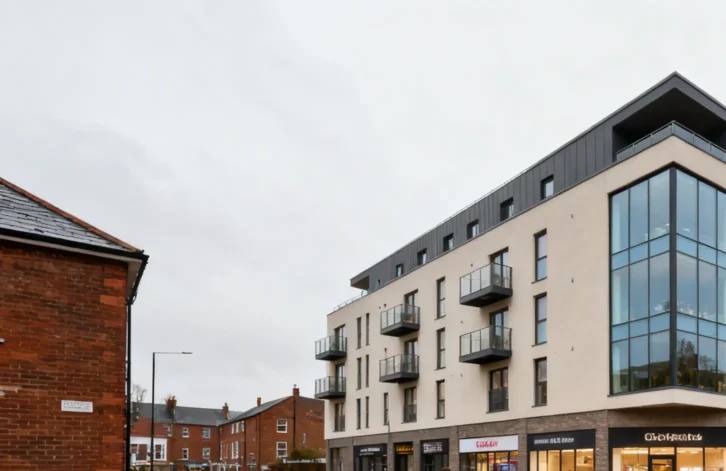
Despite continued landlord exits, rental supply has increased by more than 17% in 2026 compared to the previous year, reaching its highest level in seven years. The growth is largely driven by build-to-rent developments, which saw property listings rise 22% during the April to June quarter compared to the same period in 2025.
Nick Huntley, director of TwentyEA, said: “While it’s encouraging to see rental supply reach a seven-year high, that doesn’t tell the whole story. Many letting agents are still feeling the effects of landlords leaving the traditional PRS, reducing the stock they have available to market.”
He added that purpose-built rental housing “complements rather than replaces the role of private landlords” and that the healthiest rental market requires both segments to thrive.
Estate agency market shifts
The report also reveals changes in the estate agency landscape. Online agents now represent 3.6% of the market for property exchanges, down 7% annually. In contrast, self-employed agent models have gained momentum, with market share increasing 18.7% year-on-year to 2.5%.
Growth among self-employed agents has been recorded across all price bands, with double-digit increases observed for properties priced above £200,000. The £350,000 to £1 million price band saw the strongest growth at 22.1% year-on-year.
Regionally, self-employed agents expanded their presence across all areas except Scotland, where market share declined by 0.5 percentage points. The West Midlands and Wales recorded the largest growth at 0.9 percentage points each. Wales has the strongest presence of self-employed agents at 3.5% of market share over the past 12 months.
Market implications
The data suggests a structural shift in Britain’s rental market, with institutional investment through build-to-rent schemes offsetting some of the stock lost from traditional landlord exits. However, the continued reduction in private landlord participation, particularly as market uncertainty persists, may have long-term implications for rental availability and pricing in areas where build-to-rent development remains limited.
The rise of self-employed agent models indicates changing preferences in the property sales sector, with growth concentrated in mid to upper-tier price brackets and regional markets outside Scotland.