The concept of a luxury home in Thailand has moved well beyond the postcard image of a beachfront villa with an infinity pool. Industry estimates value the country’s luxury residential segment at roughly USD 73.7 billion in 2025, with continued growth projected through the next decade as rising regional wealth, tourism recovery, and international demand for premium living converge. What has changed most is not the price tag attached to luxury, rather it is the definition of the term itself. Buyers today weigh architecture, wellness infrastructure, security, and long-term livability alongside size and location, producing a market that looks markedly different from the one of a decade ago.
The Shifting Geography of Luxury
Bangkok remains the anchor of Thailand’s prime residential market, though its character is evolving. Limited freehold land supply in core districts such as Sukhumvit, Silom, and Sathorn continues to support pricing at the top end, while the wider Bangkok Metropolitan Region has followed what analysts describe as a “flight to quality,” with buyers concentrating demand on fewer, better-positioned developments rather than spreading it evenly across the city. Suburban districts served by expanding rail lines have become an increasingly credible alternative to central addresses, offering larger plots and gated-estate living within a reasonable commute of the CBD.
Phuket tells a different story. Once dominated by holiday-home buyers, the island has shifted toward what industry analysts term “lifestyle investment,” with a growing share of international buyers seeking villas for long-term stays, retirement, or primary residence rather than short-term rental income. Samui and Pattaya follow a broadly similar pattern, continuing to draw resort-style buyers.
A third tier of lifestyle markets, including Chiang Mai, Hua Hin, and Khao Yai, has emerged for long-stay and retirement-focused buyers. Liquidity and demand in these markets tend to run more seasonal than in Bangkok or Phuket, though their appeal continues to grow among buyers prioritizing climate, pace of life, and value over proximity to the capital.
An Evolving Architectural Language
Contemporary Thai luxury design draws heavily from the country’s traditional building vocabulary, even as it modernizes. Historic Thai houses were elevated above the ground, topped with steep, multi-tiered roofs, and oriented to encourage natural airflow, responses to a genuinely tropical climate rather than stylistic flourishes. That climate-responsive logic still underpins much of what defines luxury architecture in Thailand today.
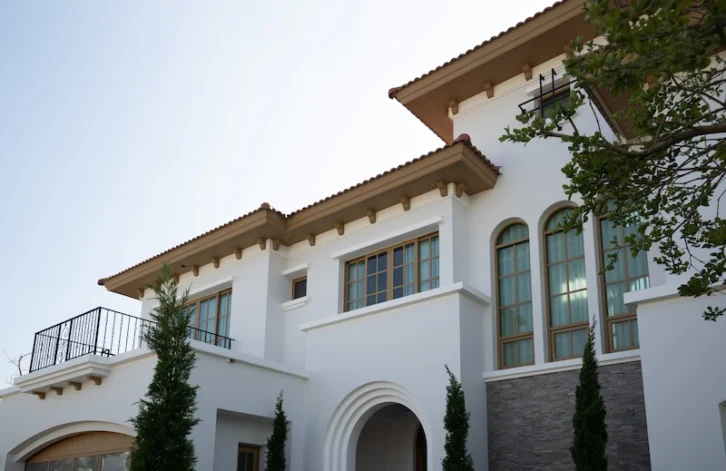
The dominant style now goes by names such as tropical modernism or contemporary tropical design: clean lines and open-plan interiors paired with wide roof overhangs, cross-ventilation, and sliding walls that erase the boundary between indoor and outdoor living. Natural materials, particularly teak and local stone, remain central to the aesthetic, now paired with more restrained, contemporary forms rather than the heavier resort or colonial styling popular in earlier decades. Interior trends moving into 2026 lean toward warm minimalism, with limewashed walls, woven textures, and earthy tones replacing the starker, gallery-white interiors of the previous cycle.
What Today’s Buyers Actually Prioritize
The buyer profile behind Thailand’s luxury market has broadened considerably. High-net-worth and ultra-high-net-worth individuals, family offices, and multi-generational households now sit alongside the traditional second-home buyer, and each group brings a distinct set of priorities to the table.
Space and privacy remain constants, particularly for multi-generational Thai families and buyers relocating from denser urban centers. Alongside these established priorities, wellness and long-term health have become genuine purchase criteria rather than marketing add-ons, with buyers increasingly asking about air quality, recreational infrastructure, and access to healthcare and education before committing to a location.
Infrastructure continues to be one of the most reliable predictors of long-term value. Continued expansion of Bangkok’s mass transit network has turned previously peripheral districts into viable investment zones, lifting land valuations near new stations and shortening commutes that once made suburban living impractical for prime buyers. For international buyers, ownership structure remains a central consideration, since Thailand caps foreign freehold ownership of condominium units at 49 percent of a building’s total area and reserves land ownership for Thai nationals. This framework has pushed structured leasehold arrangements and long-term visa programs, such as the Long-Term Resident visa, into a more prominent role in luxury purchase decisions.
The Rise of Integrated, Masterplanned Communities
Perhaps the clearest shift in the market is the move away from the standalone luxury villa as the default aspiration. A growing share of buyers, particularly multi-generational families and those relocating with children, are gravitating toward large-scale, masterplanned communities that combine residences with schools, golf, wellness facilities, and cultural or retail amenities within a single secured environment. Reignwood Park, a mixed-use development in Lam Luk Ka, Pathum Thani, is one example of this category, pairing its residential collections with an on-site international school and golf club within the wider northern Bangkok corridor. Developments of this kind reflect a broader recalibration of what luxury buyers now expect a home to deliver, beyond square footage and finishes.
Thailand’s luxury housing market enters the second half of this decade with a more mature and segmented character than it had a decade ago. Location matters as much as ever, however architecture, wellness infrastructure, and community design now carry equal weight in how buyers define value. For anyone evaluating the market, the more useful question may no longer be how large a home is, rather what kind of life it is actually designed to support.