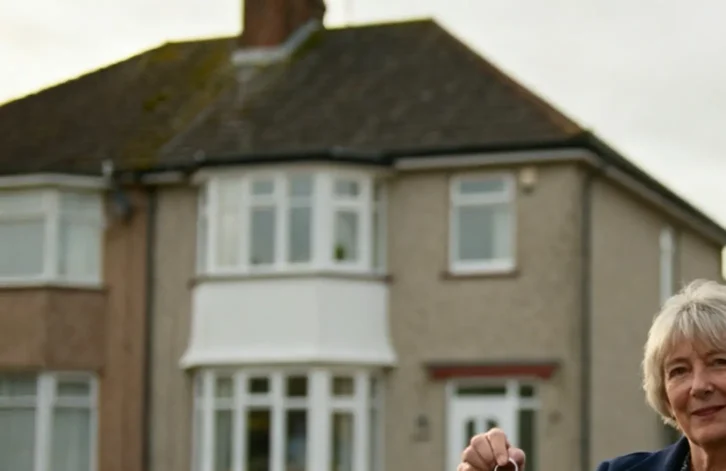
Nearly half of UK adults prioritise outright homeownership over pension savings when planning for retirement, according to new research that highlights the housing crisis’s impact on retirement planning.
A survey of 2,000 adults conducted by retirement savings provider PensionBee found that 45% cite outright home ownership as the most important factor for retirement security, compared with 36% who prioritise a large pension pot. When forced to choose, 51% said they would delay retirement to own their home outright, while only 9% would opt to retire earlier if it meant renting in later life.
Shifting retirement landscape
The findings align with a July report from the Pensions Policy Institute (PPI), commissioned by the Association of British Insurers, which warned that the British pension system was built around an assumption that most people will enter retirement with no housing costs. That assumption is increasingly outdated, with almost two million more pensioner households projected to be renting by 2044.
The trend comes as challenges facing first-time buyers continue to mount, with many opting for longer-term mortgages that spread repayment costs but extend debt obligations into later life.
Pension access proposals
The survey also examined attitudes towards a potential government scheme allowing pension savings to be accessed for first home purchases. Half of respondents aged 25 to 34 said they would consider using such a scheme if it existed. However, PensionBee’s modelling shows that redirecting £20,000 from a pension at age 30 could result in more than £120,000 in lost retirement savings by age 67.
Only 19% of respondents feel very confident their pension will cover their housing costs in retirement, while 37% are either not confident or have not thought about it at all.
Policy implications
Becky O’Connor, Head of Pensions at PensionBee, said the findings reflect how the housing crisis has reshaped retirement planning. “People prioritising homeownership over pension saving might be making a rational financial decision, as owning your home outright removes one of the biggest costs in retirement,” she said.
O’Connor noted that rising house prices have made outright ownership significantly harder to reach, with consequences including later retirement or carrying housing costs into retirement years. The challenge is particularly acute for those who cannot achieve homeownership, who must then boost retirement savings sufficiently to cover rental costs.
“The difficulty of achieving the twin major life goals of home ownership and decent pension savings has never been so apparent and the prospect that a sizeable proportion of people will not manage to achieve both is something that policymakers cannot ignore,” O’Connor said.
The research underscores the intersection between housing policy and retirement planning, as demographic shifts and affordability challenges reshape traditional assumptions about retirement security in the UK.