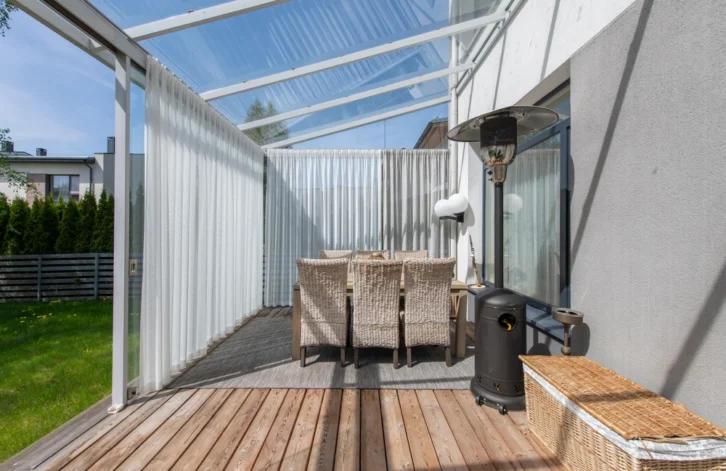
Using a gas patio heater can make outdoor entertaining feel cozy and effortless on a chilly evening. These heaters produce heat by burning propane or natural gas. This heat radiates through the air to warm people, furniture, and surrounding surfaces. Patio heaters can perform beautifully on a still night, but windy conditions can cause results to vary drastically.
Wind won’t necessarily extinguish your patio heater. But it can make it feel much less efficient while also affecting flame quality, fuel consumption, safety, and comfort. Read below to learn more about what wind does to a patio heater and how you can get the most enjoyment out of your patio heater during breezy conditions.
Heat Dispersion Occurs Quickly
The primary problem with heating outdoors when it’s windy is straightforward: wind blows the warm air away from the heater. Even if a patio heater produces the same amount of heat energy, that heat will not remain concentrated around the people who need it. Instead, moving air displaces heat before it has time to build up around chairs and tables.
This also explains why your patio heater might feel intense right next to the burner but lack warmth at your table only a few feet away. Heat from the heater has an opportunity to surround your space and people when air is still. But when it’s windy, cool air replaces the warm air too quickly for guests to feel comfortable. They may even feel heat on one side of their body while experiencing chilliness on the other.
Wind can even alter the distance people need to be from the heater to feel comfortable. Guests may have to crowd closer to the heat source to feel its effects. This can cause your patio to feel much more cramped. You may also notice that fewer people can occupy the space comfortably. A heater that heats six people on a calm night may struggle to heat two or three people when it’s windy.
The Heater Flame Can Become Unstable
Wind blowing into your patio heater can also affect flame stability. A healthy heater flame should appear blue and relatively steady most of the time. It should stay near the burner and burn in a uniform pattern. Wind can blow the flame off to one side of the heater, cause it to flicker, or even force it upwards, away from the burner ports.
When your patio heater flame becomes unstable, it will not burn fuel as efficiently as normal. You may notice that heat output becomes sporadic or that the flame appears lower than usual. The burner may also produce new sounds like rushing or popping. Some heaters may turn off automatically if the flame detection sensor determines the flame has gone out.
A sudden gust of wind can also make it difficult to light the heater. You may click the igniter, but the flame may refuse to stay lit. If wind continues to blow into the burner once the heater is lit, the pilot flame or main flame may extinguish itself a few minutes after startup. Trying to relight it over and over can be annoying and waste fuel.
Fuel Consumption Will Increase
Even if wind drastically affects heat performance, a patio heater may still consume propane at the same rate as usual. Most patio heaters come with either a fixed heat output or a small range of heat settings. If you increase the heater’s setting because it’s windy outside, your propane tank will empty long before you expect it to.
For instance, a typical propane patio heater may burn through a 20-pound tank in eight to 10 hours when running on high. Wind will not always cause a heater to consume more fuel by itself. However, wind usually causes people to keep their heaters on for longer periods or run it on the highest heat setting. Your overall fuel costs will increase over time if you do this.
Wind may even encourage people to purchase or rent more heaters than they need. Adding additional heaters can help, but it is not always necessary. Two heaters in a wide open space will probably still perform weakly if guests have no barriers between them and the wind. It may be best to improve your patio’s layout before investing in more heaters.
Be sure to check your propane tank levels before hosting a large event. If your propane tank is running low, the tank may not be able to consistently maintain pressure in cold weather. Wind can amplify the discomfort guests feel when propane levels are low. Keep a backup tank of propane on hand to avoid the party ending early because your heater quits working.
Safety Concerns Are Increased
Wind introduces many safety concerns, especially for tall freestanding patio heaters. These heaters are at risk of falling over during strong gusts of wind because they have a high center of gravity. They must be weighted down and installed correctly to prevent incidents. This danger is increased when heaters are placed on uneven ground.
The majority of freestanding patio heaters have a base you can fill with water or sand to add weight. Sand typically weighs more than water and is better for adding weight to patio heaters. Consult the manufacturer’s instructions to learn how much weight to add to your heater. Do not assume that filling the base of your heater with a small amount of water is enough to stabilize a larger unit.
Wind can blow loose objects into your patio heater. Paper plates, napkins, tablecloths, plastic bags, and lightweight décor can become dangerous if wind blows them onto or into a heater. Move all items away from the heater before lighting it. Keep heaters away from loose objects at all times when they are in use.
How to Block Wind
Ideally, you want to block wind instead of simply cranking up the heat on your patio heater. Position seating areas next to a solid wall, fence, or approved wind screen. Place the heater in an area where something can block wind from blowing warmth away from guests. Ensure there is still plenty of clearance around the heater for safe operation.
Do not place heaters too close to a wall or ceiling. Patio heaters come with recommended clearance distances. These distances keep people safe by preventing heat damage and fire. Check both the label on your heater and the owner’s manual before moving your heater to a new spot.
Case Study: A Wind-Related Patio Heater Safety Problem Led to a Major Recall
Strong wind can affect more than how comfortable your patio feels. A documented product recall shows that wind can also interfere with the way a gas heater’s safety features operate.
In July 2021, the U.S. Consumer Product Safety Commission announced a recall involving approximately 350,000 One Stop Gardens 15,000 and 30,000 BTU tank-top propane heaters. The heaters were recalled because, in windy conditions, the flame could be directed toward the rear of the unit and melt the heater’s tip-switch safety shut-off feature.
The concern was significant because the tip switch is designed to shut the heater off if it tips over. If the component is damaged by the flame, the automatic shut-off may not operate as intended, creating a burn hazard.
This example is useful when considering how wind affects outdoor gas heaters. Wind does not simply make the heat feel weaker. Depending on the heater design and wind direction, it can influence flame behaviour and potentially affect components around the burner.
The recall also demonstrates why manufacturers’ instructions should always take priority when operating a patio heater in windy conditions. A heater should never be modified or repositioned simply to compensate for poor heat performance if doing so puts it outside its approved operating conditions.
Frequently Asked Questions About Gas Patio Heaters in Wind
Can strong wind affect a gas patio heater?
Yes. Strong wind can affect how heat is distributed around an outdoor area and may also disturb the flame on some gas patio heaters. Depending on the heater design, wind can cause flickering, uneven combustion or flame extinction.
Always follow the manufacturer’s instructions regarding wind conditions and safe operation.
Does wind make a gas patio heater use more propane?
Not necessarily. Wind itself does not automatically make the heater consume more propane. However, people often increase the heat setting or leave the heater running for longer because the outdoor area feels colder.
This can increase overall propane consumption. A sheltered seating arrangement may therefore make the heater feel more effective without simply turning the burner to maximum.
Why does my patio heater keep blowing out in the wind?
A strong or poorly directed airflow can disturb the burner or pilot flame and cause it to go out. If your heater repeatedly extinguishes in windy conditions, do not keep relighting it without checking the manufacturer’s instructions.
The problem may be related to the wind, the heater’s operating environment, the gas supply or a fault with the appliance. If the flame repeatedly goes out under normal conditions, the heater should be inspected according to the manufacturer’s guidance.
What should a gas patio heater flame look like?
The exact appearance depends on the heater design, but the flame should generally burn consistently and according to the manufacturer’s specifications. A flame that suddenly becomes unstable, unusually low, excessively yellow, noisy or displaced from its normal position can indicate a problem.
Do not attempt to adjust gas pressure or modify the burner yourself. If the flame behaves differently from normal, switch the heater off and consult the manufacturer’s instructions or a qualified professional.
Should I use a patio heater when it is very windy?
That depends on the specific heater and the manufacturer’s operating instructions. There is no single wind-speed limit that applies to every gas patio heater.
Some outdoor heaters are designed with specific wind tolerances or operating requirements, while others may become unstable or unsafe in stronger conditions. Check the owner’s manual before using your heater in strong wind rather than assuming that a particular wind speed is safe.
Can I put my patio heater closer to a wall to protect it from wind?
You should not move a patio heater closer to a wall simply because it is windy. The new position must still comply with the manufacturer’s required clearances from walls, fences, furniture, overhead structures and combustible materials.
A wall or approved wind barrier may help create a more comfortable seating area, but it must not interfere with the heater’s ventilation or safe operating clearances.
Why does my patio heater feel weaker when it is windy?
Wind rapidly moves warm air away from the area around the heater. This can make the heat feel less concentrated even when the burner is producing a similar amount of heat.
The effect can be particularly noticeable in an exposed garden or patio. Guests may feel warmth when standing close to the heater but much less warmth a few metres away.
Can wind make a patio heater dangerous?
Yes, depending on the heater and conditions. Wind can contribute to instability, disturb flames, move combustible objects toward the heater and affect components around the burner.
A 2021 CPSC recall demonstrates that wind can create a specific safety problem on some propane heaters: the flame could be directed toward a rear safety shut-off component and damage it.
What is the safest way to use a gas patio heater in windy weather?
Start by checking the manufacturer’s instructions for your specific heater. Keep the appliance on a stable, level surface, maintain the required clearance around it, remove loose objects from the area and never operate it in an enclosed or unsuitable space.
If the flame repeatedly goes out, becomes abnormal or behaves differently from normal, stop using the heater rather than repeatedly trying to relight it.
Can I use a windbreak with a gas patio heater?
A windbreak can sometimes make an outdoor seating area more comfortable, but it must be positioned without violating the heater’s required clearances or restricting ventilation.
Do not surround a gas patio heater with fencing, screens, curtains or other materials simply to trap heat. Check the heater’s instructions before introducing any windbreak or barrier.