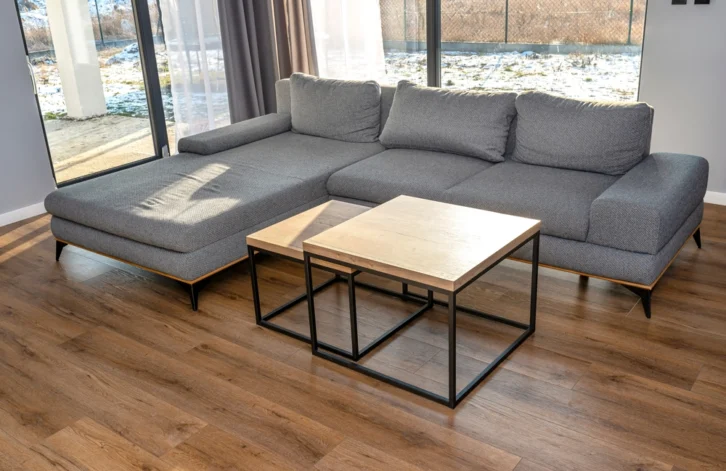
There’s a common decorating dilemma that comes up whenever wooden furniture meets wooden flooring: does everything need to match?
Perhaps there’s a beautiful oak dining table, a darker walnut sideboard and light wood flooring already in place. Individually, they all look lovely. But put them together, and suddenly there’s a worry that the room might feel mismatched.
Fortunately, mixing three different wood tones in one room isn’t just possible, it can make a space feel more interesting and considered. The secret lies in understanding how different shades, undertones and finishes work together.
Do Different Wood Tones Have to Match?
Not at all. In fact, matching every wooden surface can sometimes make a room feel a little too coordinated.
Think about older homes that have evolved over time. Original floorboards might sit alongside antique furniture, newer cabinets and pieces collected over the years. It’s often this variation that gives a room its character.
The same principle works in contemporary interiors. Mixing wood tones introduces contrast, depth and a more relaxed appearance, particularly when combined with different textures and materials.
Follow the Rule of Three
One of the easiest ways to create a balanced scheme is to work with three wood tones: a dominant shade, a secondary shade and an accent.
Rather than giving each finish equal attention, this approach creates a natural hierarchy that helps everything feel connected.
For example:
- Dominant tone: Light oak flooring covering most of the room.
- Secondary tone: A medium-toned wooden dining table or cabinet.
- Accent tone: Dark walnut chairs, shelving or smaller decorative pieces.
The flooring naturally becomes the dominant tone because it covers such a large surface area. Furniture introduces variation, while smaller accents add contrast without overwhelming the space.
Pay Attention to Wood Undertones
Two pieces of wood might look completely different in colour but still work beautifully together if their undertones complement one another.
Wood generally has warm, cool or neutral undertones.
Warm woods often feature golden, honey or reddish hues. Cool woods tend towards grey or muted brown shades, while neutral finishes sit somewhere between the two.
For a harmonious look, try choosing woods with similar undertones, even if their overall shades differ.
For example, honey oak flooring can work beautifully with richer walnut furniture when both have a warm appearance.
That doesn’t mean warm and cool woods can never mix. However, combining them successfully usually requires a little more thought.
Use Your Flooring as the Starting Point
When mixing wood tones, flooring is often the most sensible place to begin.
Unlike furniture, which can be rearranged or replaced relatively easily, flooring is a more permanent design decision. It also occupies a significant amount of visual space, influencing how every other wooden finish appears.
Light wood flooring offers a versatile foundation, allowing darker furniture to stand out without making the room feel heavy.
Medium oak flooring works particularly well with both lighter and darker woods, creating a balanced, layered appearance.
Dark wood flooring, meanwhile, provides a dramatic backdrop for lighter furniture, helping prevent the room from feeling overly dark.
There’s also no need to match furniture to the flooring exactly. Choosing a noticeably different shade can often create a more interesting result.
Create Contrast Rather Than Almost-Matches
One of the trickiest combinations is two wood tones that are incredibly similar but not quite the same.
For example, a pale oak dining table placed directly on slightly darker parquet flooring might look like an unsuccessful attempt at matching.
Choosing a more noticeable contrast can feel more intentional.
Try pairing light oak flooring with a medium walnut table, or darker wooden floors with pale ash furniture. The difference becomes a deliberate design feature rather than something that looks accidental.
If similar tones are unavoidable, a rug can help separate the surfaces and soften the transition.
Repeat Wood Tones Throughout the Room
A simple way to make different woods feel connected is to repeat each tone in more than one place.
For example, if there’s a dark walnut coffee table in the centre of the living room, introducing a similar shade through picture frames, shelving or decorative accessories can help tie everything together.
These details don’t need to match perfectly. Even subtle similarities can create a sense of continuity.
Soft furnishings, wall colours and lighting can also help bridge the gap between contrasting wooden finishes.
Is Mixing Three Wood Tones Worth It?
Absolutely, particularly for anyone who wants a home that feels collected over time rather than decorated all at once.
Mixing wood tones offers more flexibility when choosing furniture, making it easier to incorporate existing pieces without replacing everything to achieve a matching look.
The most successful combinations start with a dominant finish, introduce complementary undertones and use contrast thoughtfully.
Ultimately, wooden furniture doesn’t have to match wooden flooring. Sometimes, it’s the differences between them that make a room feel more natural, welcoming and full of character.