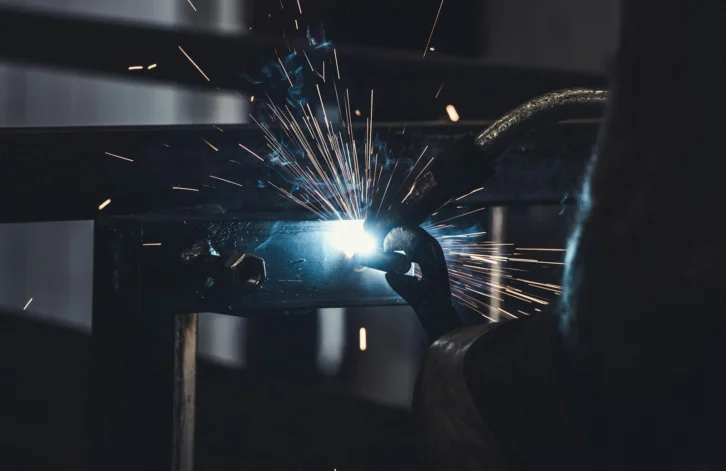
A hobbyist-grade welder often feels like a lifesaver at first: you buy it, plug it in, and suddenly you’re welding a shelf or fixing a gate. But eventually, a more demanding project comes along, and you find yourself looking for a MIG welder for sale with a completely different level of capability.
If your machine starts overheating, the wire feed becomes jerky, and your welds turn out ragged, it doesn’t mean your skills have declined. It simply means your tool has reached its limits.
When a Hobbyist Welder Can No Longer Keep Up
The first sign is overheating. Budget models are designed for short duty cycles, so they require a cooling-off period afterward. If you’re welding long seams or working for several hours straight, these frequent pauses start to eat into your productive time.
The second sign is an unstable arc, which causes excessive spatter, requires extensive post-weld cleanup, and produces inconsistent results. A third sign is a limit on the thickness of metal you can weld; when 160 amps is no longer enough, but you want to take on more serious projects, it’s time to upgrade to a professional-grade machine.
Key Parameters to Consider
Technical specs can be misleading if you don’t know how to read them. The key number is duty cycle: how long a machine can run at a set current without a break. Professional models often reach 70% at maximum current. Hobby machines fall well short of that.
But duty cycle isn’t everything. What matters is how the whole machine works together: the power source, the wire feed, and the arc controls. Before you buy, check these:
- actual duty cycle at maximum amperage;
- four-roll wire-feed mechanism;
- smooth, adjustable arc inductance;
- support for 15 kg and 18 kg wire spools;
- capability to perform MIG welding on aluminium;
- power supply options of 230V or 400V, depending on your specific requirements.
Every part depends on the others. A powerful source with a weak wire feed will give you a ragged weld. So judge the machine as a whole, not by one impressive number on the spec sheet.
Warranty and Origin: Where You Shouldn’t Cut Corners
The price is only the start. What matters more is how long the machine lasts and who helps you if something breaks. So take a close look at the warranty and service terms.
PATON focuses precisely on this. Their equipment is designed and manufactured in Ukraine, utilising components from world-class suppliers. Certain models in the ProMIG series come with a warranty of up to 5 years, even for commercial/business use. The stated product specifications match real-world performance, a rarity in today’s market. Plus, these professional-grade machines stay compact and require no special transport arrangements.
Don’t overlook functionality either. Modes like 2T/4T, pulse, VRD, and brazing open up many more jobs. One machine can handle everything from car body repair to structural welding to aluminium.
Moving up to a pro machine isn’t a whim. It’s a response to a growing workload. Overheating, an unstable arc, and a lack of power all say the same thing: it’s time. When you compare options, use one simple rule. Look at duty cycle, wire feed, and arc control together, not one by one.
Don’t forget what the datasheet doesn’t show. Warranty, support, and the quality of the parts inside decide whether the investment pays off. A good machine will serve you for years and bring in more work. A poor one will slow you down on every weld.