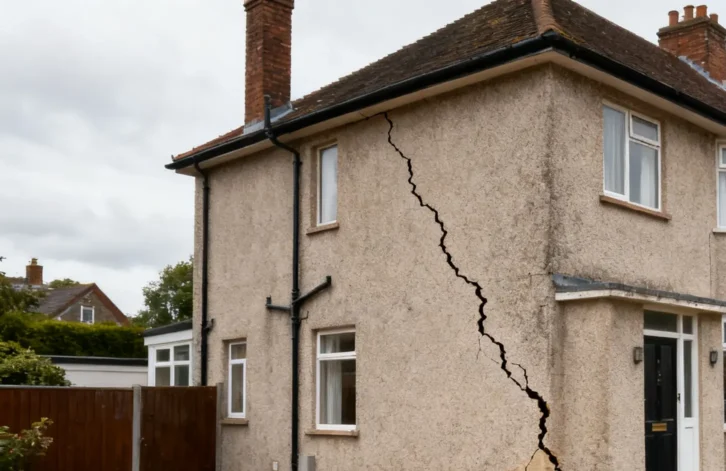
Major UK insurers have reported significant increases in subsidence claims following two consecutive record hot summers, highlighting growing climate-related risks for property owners and the insurance sector.
Aviva, the UK’s largest insurer, confirmed it experienced a rise in subsidence claims during a peak period between July and September, with claims continuing into October. Chief executive Amanda Blanc told Bloomberg the company would not disclose specific figures on the scale of the increase.
The trend extends across the insurance industry. Hastings Direct reported record subsidence claims in August, up 140% compared with the previous year. Axa, another major home insurer, described 2024 as a ‘surge year’ for subsidence.
Financial impact
The average subsidence claim in the UK reached £20,000 between April and June, more than £2,000 higher than the same period in 2023, according to the Association of British Insurers. Total payouts for domestic subsidence claims hit £72m in that quarter, compared with £60m a year earlier.
Despite the rise in claims, Aviva reported a 19% increase in general insurance premiums to £11.8bn in the third quarter. The insurer’s performance reflects broader market conditions affecting property values and insurance costs across England.
Climate projections
The British Geological Survey estimates that up to 11% of UK homes, more than 4.2 million properties, could be at risk of subsidence by 2070 due to climate change. August 2024 was recorded as the joint hottest month globally.
Drier summers cause soil beneath properties to shrink, undermining foundations. Subsequent wetter winters cause the ground to expand, potentially causing further structural damage. Properties most at risk include older buildings with shallow foundations and those constructed on clay-rich soil.
Areas identified as particularly vulnerable include London, Essex, Kent and regions around Oxford. Blanc advised homeowners to monitor drains, pipes and gutters, and address any leaks that could affect ground conditions. She also recommended managing trees and plumbing systems to reduce subsidence risk.
The increase in climate-related claims comes as the property sector faces various challenges, with transaction patterns showing sensitivity to market conditions and financing arrangements adapting to changing risk profiles.
The rising subsidence claims represent a growing concern for property investors and homeowners, particularly those holding older properties in vulnerable areas. The trend is expected to continue as climate patterns evolve, potentially affecting property valuations and insurance premiums in affected regions.