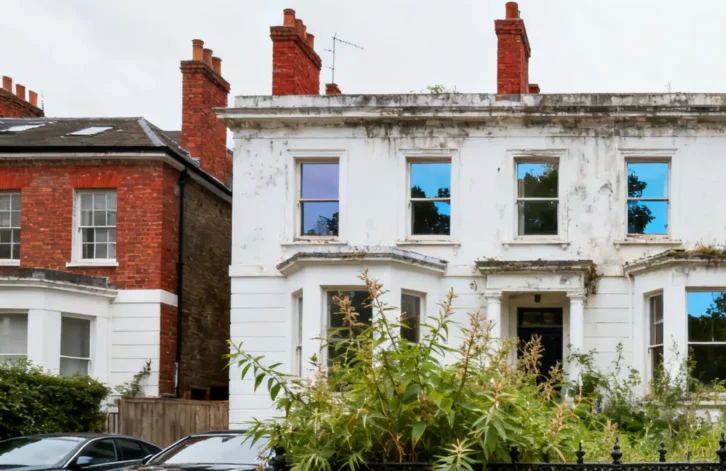
The owner of a £4 million Chelsea townhouse has been issued with a second enforcement order requiring him to clear overgrown vegetation at the property, following complaints from 46 neighbouring residents.
Kensington and Chelsea Council has served Nicholas Halbritter with a Section 215 notice, a legal mechanism that enables local planning authorities to compel property owners to address land or buildings that negatively impact local amenity.
Japanese knotweed concerns
The property was previously subject to enforcement action in 2016, when neighbouring borough Hammersmith and Fulham issued a Section 215 notice requiring treatment of Japanese knotweed and clearance of overgrown vegetation and rubbish. Mr Halbritter was prosecuted in 2017 for failing to comply with that order.
The garden was cleared by November 2017, and the enforcement case was closed after the notice was deemed complied with. However, the recent petition from neighbours has prompted renewed action from the council.
Impact on property values
The presence of Japanese knotweed can significantly affect property marketability and valuations. Mortgage lenders typically refuse to provide financing on properties with or near the invasive species without a formal treatment plan in place to manage potential structural damage risks.
The issue highlights ongoing challenges for property owners and neighbours dealing with neglected properties in prime London locations. Similar enforcement actions have been taken against landlords in other cases, including recent prosecutions for property-related offences.
A Kensington and Chelsea council spokesperson confirmed: “Following the decision of the Planning Applications Committee, we are proceeding with a Section 215 notice and will progress it in line with the legislation and relevant guidance.”
Enforcement process
The 2016 notice was investigated under a bi-borough working arrangement between three councils to share enforcement resources. The current notice represents a separate enforcement action following the fresh complaints.
Section 215 orders are typically used as a last resort when informal approaches to resolve property maintenance issues have failed. Non-compliance can result in prosecution and potential fines.