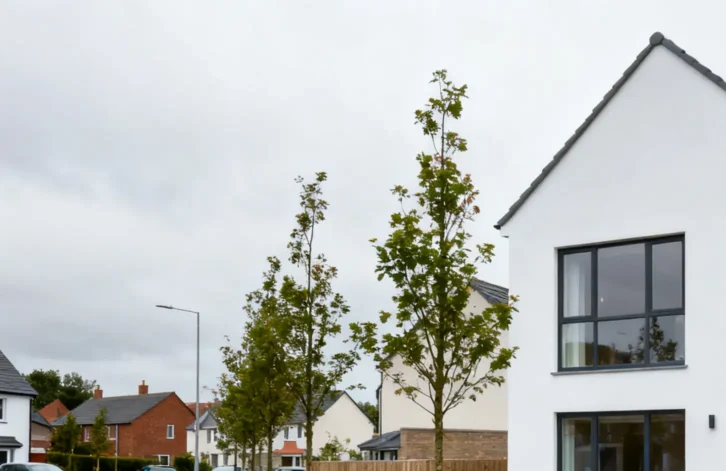
Enquiries from existing homeowners for new-build properties have increased 23% in the first half of 2026 compared to the previous six months, according to data from portal newhomesforsale.co.uk.
The figures suggest that second and third-time buyers are becoming a more significant source of leads for housebuilders, particularly those with larger family homes.
Regional variations
The North East recorded the largest increase at 43%, followed by the South East at 34% and the East of England at 26%. London was the only region to experience a decline, falling 1%.
The shift comes as market conditions continue to evolve across different segments of the property sector.
Marketing strategies under review
The portal’s analysis indicates that housebuilders may need to adjust their marketing approaches, which currently focus heavily on first-time buyers. Existing homeowners typically respond to different incentives, including part-exchange schemes, chain-free completion, flexible timelines and Stamp Duty contributions.
Lucy Woodhall, sales director of Persimmon & Charles Church Suffolk, said: “We’ve definitely noticed a shift in who’s coming through our doors with more existing homeowners asking about part-exchange and chain-free completion.”
Mark Hincks, director of newhomesforsale.co.uk, noted that existing homeowners face different barriers compared to first-time buyers. “Many buyers in the resale market face the risk of fall throughs and uncertainty on timing a purchase,” he said.
Market implications
The trend reflects broader changes in the housing market, where existing homeowners typically face higher Stamp Duty bills than first-time buyers, who qualify for relief. Benefits such as part-exchange, lower running costs and greater certainty around moving dates may become more important factors for this growing segment.
The data suggests housebuilders with family-sized properties may need to reconsider their incentive structures to capitalise on this shift in buyer demographics, particularly in regions outside London where growth has been strongest.