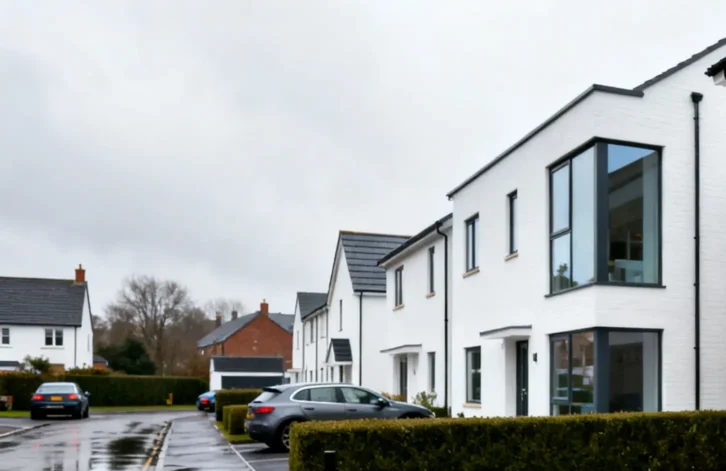
The Home Builders Federation has renewed calls for the government to reintroduce the Help to Buy Equity Loan Scheme, citing record-low planning approvals and suppressed demand in the new-build market.
The scheme, which operated between 2013 and 2022, enabled buyers to purchase new-build properties with a 5% deposit alongside a government-backed loan. According to Homes England data, the Treasury generated a return of £1.24 billion on Help to Buy loans, including £218 million in the past year alone.
Planning approvals hit record low
The renewed calls come as HBF data revealed that just 1,220 sites for private housing received planning approval across England in the first quarter of this year, the lowest figure since records began in 2006. The organisation attributed the decline to high mortgage rates and the absence of government support schemes.
Neil Jefferson, Chief Executive at the Home Builders Federation, stated that the scheme “supported a third of a million first-time buyer households into home ownership” and delivered a £1.25 billion return for taxpayers on repaid equity loans. He argued that the lack of government support is “suppressing effective demand for new homes” and preventing young people from accessing the housing ladder.
Jefferson called for the publication of the government’s evaluation of Help to Buy, completed earlier this year, to inform discussions about potential new support schemes for first-time buyers. Major developers including Bellway have also advocated for deposit support schemes to stimulate demand, though recent data showing declining sales activity suggests broader market challenges.
Critics warn of affordability risks
Not all industry voices support the scheme’s return. Charlie Lamdin, founder of BestAgent, described calls to revive Help to Buy as “dangerously short-sighted”, arguing they ignore the programme’s long-term impact on house prices and affordability.
“Housebuilders calling for another Help to Buy scheme is understandable, but we need to distinguish between stimulating demand and making housing more affordable,” Lamdin said. He warned that providing buyers with additional purchasing power in a supply-constrained market risks allowing sellers to charge more rather than improving affordability.
Lamdin suggested the government should instead consider reducing high lending multiples and longer mortgage terms, which have increased buyers’ purchasing power and sustained higher prices. “Simply building more homes will not automatically make them cheaper if access to debt continues to expand,” he added.
Government position unclear
Former Chancellor Rachel Reeves ruled out resurrecting the Help to Buy scheme earlier this year. However, following recent government changes, it remains unclear whether her replacement John Healey will maintain this position. The property sector continues to face headwinds, with forecasters predicting price declines amid challenging market conditions.
The debate highlights ongoing tensions between stimulating housing supply through demand-side interventions and addressing fundamental affordability challenges in the UK property market. With planning approvals at historic lows and market activity subdued, the government faces pressure to clarify its approach to supporting both housebuilders and first-time buyers.