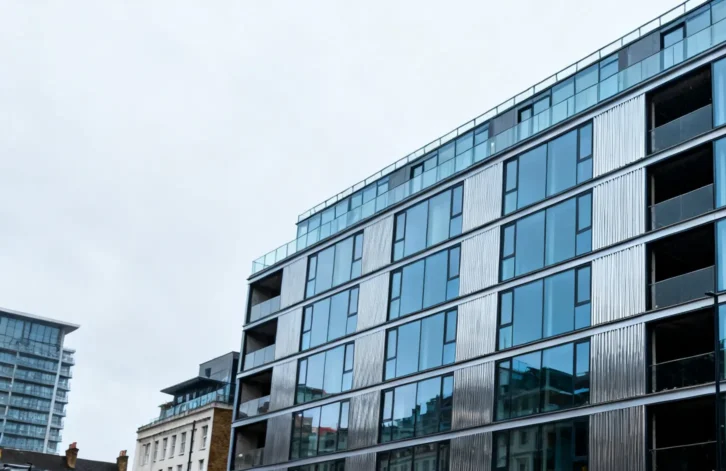
The number of completed but unsold homes in central London has tripled since 2016, reaching 1,400 units by the end of September, according to market researcher Molior. The accumulation of empty properties in postcodes including Mayfair, Marylebone, Chelsea and Kensington signals mounting challenges for developers in the capital’s prime residential market.
New construction starts in zone 1 have fallen 75% over the past decade, with just 1,600 homes beginning construction in the past 12 months. The slowdown reflects a combination of rising construction costs, higher borrowing rates and weakened demand from the wealthy buyers who typically purchase these properties.
Developer insolvencies mount
The market pressures have led to notable corporate failures. London Richmond, which marketed properties in South Kensington, Wimbledon and West Hampstead, appointed administrators in August after exhausting its funding. More than 300 creditors are awaiting payment of £39m in outstanding debt, according to administrator BTG.
Ardmore Construction entered administration in 2025 while working on 10 major projects including residential towers in King’s Cross and hotel developments in Mayfair and Kensington. The construction division owed more than £29m to creditors and subcontractors as of September, though its parent company Ardmore Group continues operating under a company voluntary arrangement.
Tax changes impact overseas buyers
Jon Neale of property consultancy Montagu Evans identified a dual challenge facing developers. “The fundamental problem is that construction costs have gone through the roof,” he said. “On the other side, demand for these properties has gone down. A lot of those homes are being sold to overseas buyers and they are not in the market as much as they were.”
Overseas purchasers now face stamp duty of up to 19% on additional properties. A £10m home purchase, for example, could trigger a £1.9m stamp duty bill. The abolition of the non-dom tax regime has further reduced demand from international buyers.
Marcus Dixon of real estate company JLL said uncertainty over taxation and holding costs has deterred discretionary purchasers. “This hits the prime markets, both new and existing homes, harder, as we see fewer needs-based buyers in this sector of the market,” he said.
Flat prices stagnate
The average London flat price stood at approximately £431,000 in June, down £2,000 from the same month in 2016, according to Land Registry figures published in August. Had prices kept pace with inflation, the average would be £180,000 higher. House prices, by contrast, rose approximately 20% over the same period.
Even high-profile developments have struggled. No 1 Palace Street, located near Buckingham Palace, entered administration in 2023. By 2025, only 20% of the project’s flats had sold, according to administrator FRP Advisory.
Larger developers have also retreated from the market. British Land announced in October it would not proceed with the second phase of its Canada Water development, citing soaring costs and weak sales. Berkeley Group, the city’s largest residential developer, stated it would stop acquiring new land, while Taylor Wimpey plans to exit the London market entirely.
Employment impact
The construction sector recorded 7,000 fewer vacancies in the July to September quarter, according to Office for National Statistics estimates, making it the hardest-hit sector across the UK workforce. The decline reflects reduced development activity across the capital.
The challenges facing London’s prime property market extend beyond individual developers. The combination of elevated construction costs, higher borrowing rates, tax changes affecting overseas buyers, and broader affordability pressures across the UK housing market has created conditions that make high-end residential development increasingly difficult to justify commercially.
The market conditions suggest a prolonged adjustment period for London’s prime residential sector, with implications for construction employment, developer finances and the capital’s property landscape. Whether demand recovers sufficiently to absorb the existing stock of unsold homes remains uncertain as developers navigate elevated costs and reduced buyer appetite.