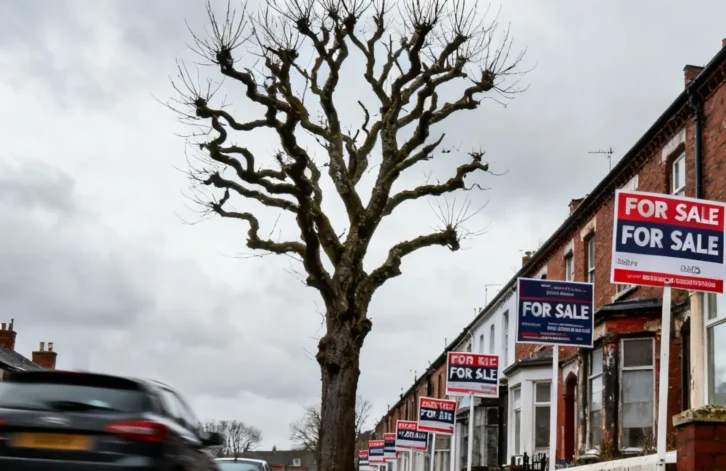
Properties priced above market value are taking significantly longer to sell, according to data from multiple property indices, with homes requiring price reductions spending an average of 91 additional days on the market compared to correctly priced listings.
Analysis from Rightmove shows that homes sold without price reductions completed in 36 days, whilst those requiring reductions took 127 days. The data comes as stock levels reach their highest point for this time of year since 2015, with almost a third of existing listings seeing prices reduced.
Regional price divergence
Buyer affordability is driving a clear divide between price growth in northern and southern England. The North East has recorded growth of 2.7% and the North West 2.6%, whilst London has seen prices drop 2.4% and the South East 1.6%, according to Rightmove’s May index.
Home.co.uk reported that stock levels surged by 31,569 properties in March, with new instructions reaching their highest level since 2008. The data showed a 1% increase on March 2025 figures, with Scotland and London experiencing the largest year-on-year increases in supply.
Despite the increase in available stock, the typical time on market for unsold properties has decreased, though the mean time remains relatively high, indicating a significant number of properties are remaining unsold for extended periods.
Sales activity holds steady
Zoopla’s April data indicates that sales agreed are tracking 1% ahead year-on-year, marking the first annual increase in eight months. The portal reported that buyer demand rebounded after Easter to its highest level since the Middle East conflict began, though overall demand remains 10% below year-on-year levels.
The divergence between committed movers completing transactions and discretionary buyers stepping back has defined market activity in 2026. Homes are taking just one day longer to sell than last year across more than half of UK regions, despite higher mortgage rates.
Rightmove data shows the number of sales agreed is 4% below last year, when mortgage rates were significantly lower. Analysis suggests that only around 50% of properties listed are achieving sales, with recent market resilience dependent on realistic pricing strategies.
Implications for agents
The extended marketing periods associated with overpriced properties are affecting agent cashflow and profitability. With increased stock levels giving buyers more choice, properties entering the market at incorrect price points face greater risk of protracted sales processes and transaction fall-throughs.
Research from the Home Buying and Selling Council indicates that longer purchase and sale periods correlate with higher fall-through rates. This trend is particularly relevant as consolidation continues in the agency sector, with firms seeking to maintain profitability in challenging conditions.
The data suggests that agents face a balance between winning instructions and ensuring realistic pricing from the outset. Properties launched at market-appropriate prices are progressing to completion more quickly, whilst those requiring subsequent reductions are experiencing significantly extended sales periods that impact both seller outcomes and agent resources.