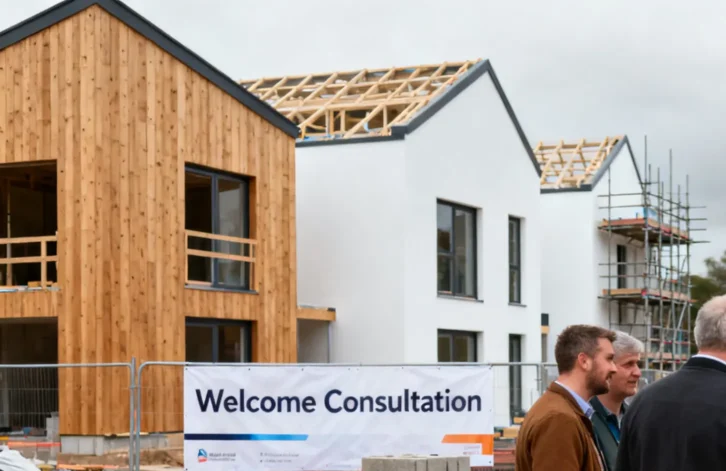
More than two in five British adults support new homes being built within three miles of their residence, according to research from Barclays that challenges conventional assumptions about public opposition to development.
The bank’s latest Property Insights Report found that 43% of adults support local housebuilding, nearly double the proportion who oppose it. The findings suggest that ‘YIMBY’ (Yes In My Back Yard) sentiment is more prevalent than ‘NIMBY’ (Not In My Back Yard) attitudes across the UK.
Policy priorities and demographic patterns
Building social or affordable housing emerged as the top housing policy priority for 32% of respondents, followed by reducing homelessness at 28% and helping first-time buyers onto the property ladder at 22%.
Support for development varies significantly by age group. Half of Gen Z respondents back new homes locally, compared to 48% of Millennials, 42% of Gen X and 36% of Baby Boomers. Opposition increases with age, rising from 16% among Gen Z to 26% among Baby Boomers.
Jatin Patel, Head of Mortgages, Savings and Insurance at Barclays, said: “New homes are critical to easing tension in the housing supply, but attitudes towards development are nuanced. While UK consumers are broadly supportive of efforts to increasing housing supply, this has to be in step with investment in local infrastructure, healthcare and transport links.”
Market implications
Nathan Emerson, Chief Executive at Propertymark, commented that the findings highlight the need to consider whether the market delivers the right homes in appropriate locations. “New development needs to create a genuinely functioning housing market, with a mix of tenures and property types that supports people at different stages of life, not simply add headline numbers to housing targets,” he said.
The research comes as tax concerns continue to dominate landlord sentiment in the UK property sector. Emerson emphasised the importance of making better use of existing housing stock and ensuring people can move when circumstances change.
He added that transaction confidence remains a factor, noting that uncertainty around costs and paperwork creates friction in the market. The ability for people to move through the market plays a role in creating a functioning housing system, particularly as regulatory changes affect different segments of the rental market.
Outlook
The data indicates public attitudes towards development are more supportive than often portrayed, though acceptance remains conditional on infrastructure investment and appropriate housing mix. The age divide in support levels suggests demographic shifts may further influence planning debates in coming years.