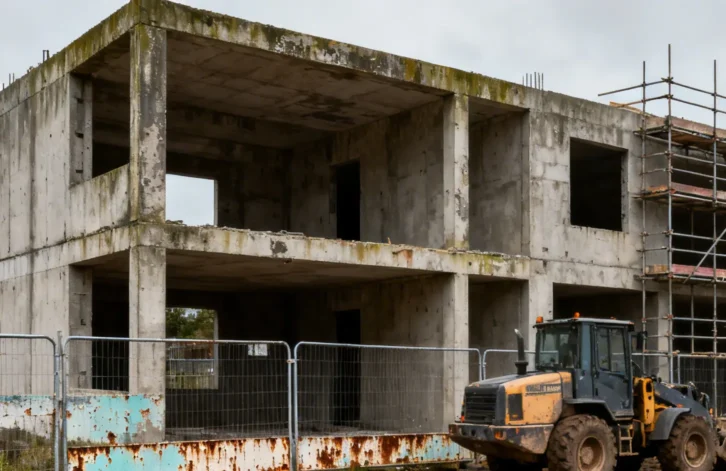
The value of new UK construction projects fell by more than a third in the three months to the end of February, according to data provider Glenigan, as global economic instability continues to impact Britain’s property sector.
Major works valued at over £100 million have been particularly affected, with developers pausing schemes across office building, civil engineering and residential housing sectors. The decline follows a period of optimism in November, when major developers had anticipated growth following signals from Chancellor Rachel Reeves regarding the autumn budget.
Market volatility impacts development pipeline
Allan Wilen, Glenigan’s economics director, said the industry faces significant challenges. “We’re in a deeply worrying position where market volatility means prices are erratically fluctuating on a daily basis, dictated by the direction of international affairs. The decline in construction activity has deepened and hopes for a recovery in the second half of the year now hang in the balance,” he stated.
The construction slowdown presents implications for government tax revenue, as projects remain stalled. The sector’s sensitivity to international events has increased since the Covid-19 pandemic disrupted supply chains and elevated raw material costs.
Affordable housing requirements under pressure
The market conditions have led to developers seeking concessions from local authorities on affordable housing requirements and public amenities. Reports indicate growing instances of developers requesting reductions in affordable housing quotas.
One case involves British Land’s dispute with Southwark council over a tower development. The developer has proposed increasing the building’s height whilst reducing affordable apartments from 35% to 3% of the total units. London Mayor Sadiq Khan has indicated he will adjudicate on the matter.
Implications for housebuilding targets
The property sector’s performance carries significant weight in the UK economy, with the financial services sector heavily tied to property wealth through loans secured against homes, offices and factories. Consumer spending patterns are also influenced by property transactions and perceived wealth tied to property values.
The current account deficit, driven by the UK importing more than it exports, is partially offset by asset sales, with property comprising a substantial portion of these transactions.
The slowdown in consumer home purchases reflects both affordability constraints and risk aversion in uncertain economic conditions. This hesitancy has cascading effects on building firms, property developers and associated service companies.
The government’s reliance on private sector developers to deliver housing schemes faces renewed scrutiny as market conditions enable developers to negotiate reduced public benefit requirements. Questions are emerging regarding whether local councils and mayors should take a more direct commissioning role in housing projects, with building firms operating as contractors rather than development partners.
The construction industry outlook for the remainder of the year remains uncertain, with recovery prospects dependent on stabilisation of international economic conditions and raw material pricing.