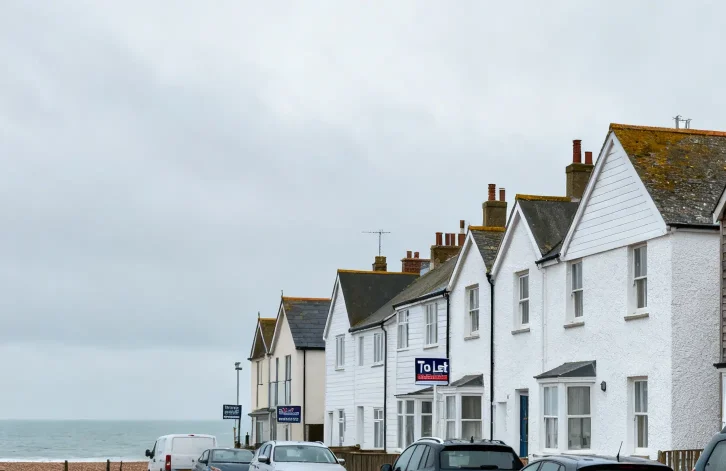
England’s second home count has dropped by approximately 20,000 properties since 2024, according to government figures released on 18 November. The decline is most pronounced in areas where councils have implemented double council tax premiums on second homes.
Analysis of council-level data shows that in the 30 council areas outside London where at least 1.5% of homes are subject to the premium, second home numbers fell 9.7% in the year to September 2026, compared with 2.6% across the rest of England outside London.
Price falls concentrated in premium zones
House prices have declined most sharply in the same locations. In the nine council areas with the highest concentration of second homes paying double council tax—including Cornwall, South Hams, North Norfolk and the Isle of Wight—prices have fallen 8.8% from their 2022 peak, equivalent to approximately £27,000 on a typical sale price of £280,000. This compares with a 3.0% fall across the rest of England.
The nine areas have given back more than a third of the price increases recorded between 2019 and 2022, when coastal properties surged during the pandemic. Since the second half of 2023, prices in these areas have fallen 5.0%, while the rest of England saw a 0.6% rise.
North Devon recorded the steepest decline at 14.0%, followed by Chichester at 11.1% and the Isle of Wight at 10.8%. The analysis combined nearly 6 million Land Registry sales in England since 2019 with government council-level records of second homes and properties paying double council tax.
Multiple tax changes impact market
The second homes premium, which doubles council tax on furnished properties that are not primary residences, is one of several policy changes affecting this segment. Stamp duty on additional home purchases increased from 3% to 5% in October 2024, and tax breaks for furnished holiday lets ended in April 2025.
These changes come as property auction sales have declined 14.6% in October 2026, indicating broader market pressures. The data cannot establish how much of the price decline is attributable specifically to the council tax premium versus other factors, including higher mortgage rates that have affected all areas since late 2022.
Rental market divergence
While purchase prices have fallen, rental costs have continued to rise. Private rents in the nine most affected areas increased 21% since the end of 2022, only slightly behind the 25% rise across England. This divergence suggests reduced supply in the rental market, contrasting with challenges facing landlords in other areas where rent arrears have reached £9,000 as court delays have doubled landlord losses.
The nine council areas most affected are Cornwall, Westmorland and Furness, King’s Lynn and West Norfolk, the Isle of Wight, Chichester, North Norfolk, North Devon, South Hams and the Isles of Scilly. In each, at least 3 in every 100 homes pay the second homes premium.
Among councils outside London that charge the premium, the pattern is consistent: the higher the share of homes paying double council tax, the greater the price decline. In areas where fewer than 1 in 200 homes pay the premium, prices are up 1.1% on their 2022 level.
A spokesperson for Coastal Chart Wallpaper, which conducted the analysis, noted that the figures show where prices fell most but cannot establish causation. The data indicates that purchasing in these areas has become more affordable, while renting costs have not followed the same trajectory.