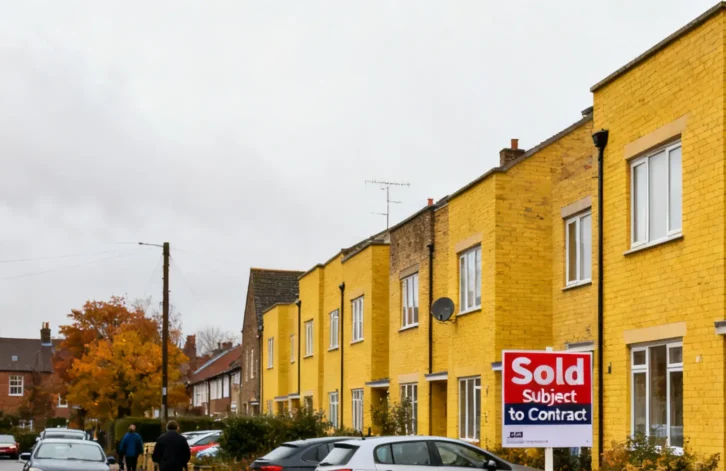
Mortgage approvals for UK home purchases dropped to their lowest level in 32 months during August, as geopolitical tensions contributed to rising borrowing costs, according to Bank of England data released on Tuesday.
Just 54,918 mortgages for new home purchases were approved in August, the lowest monthly total since December 2023. The seasonally adjusted figures reflect a 15% decline compared to the same month in 2025.
Rising borrowing costs
The Bank of England reported that the effective interest rate on newly drawn mortgages increased to 4.60% in August, up from 4.45% in July. Moneyfacts data showed the average five-year fixed mortgage rate reached 5.94% on Tuesday, its highest level since October 2023, whilst two-year fixed mortgages averaged 5.93%, the most expensive since July 2024.
Simon Gammon, managing partner at Knight Frank Finance, said: “Buying activity weakened through the summer as rising energy prices pushed up borrowing costs. Lending to homebuyers fell 15% in August compared to the same month a year earlier.”
Remortgage market softens
Approvals for remortgaging declined to approximately 34,000 in August from 34,600 in July, suggesting refinancing demand has softened despite many borrowers reaching the end of existing fixed-term rates.
Katie Clinton, head of financial services advisory at KPMG UK, said: “A further fall in mortgage approvals in August points to affordability pressures continuing to weigh on housing demand, as the shocks from the Iran conflict push up both inflation and mortgage rates.”
The decline in mortgage activity comes as the sector faces multiple challenges, including concerns over insurance availability for flood-risk properties and broader market pressures affecting the rental sector.
Market outlook
Paul Dales, chief UK economist at Capital Economics, noted that the prospect of mortgage rates remaining above 4.5% for most of 2027 would likely have a larger influence on market activity than the government’s recently announced “Your First Home” scheme for first-time buyers.
The data indicates continued affordability pressures in the housing market, with rising energy prices and geopolitical uncertainty contributing to elevated borrowing costs that are dampening both purchase and remortgage activity.