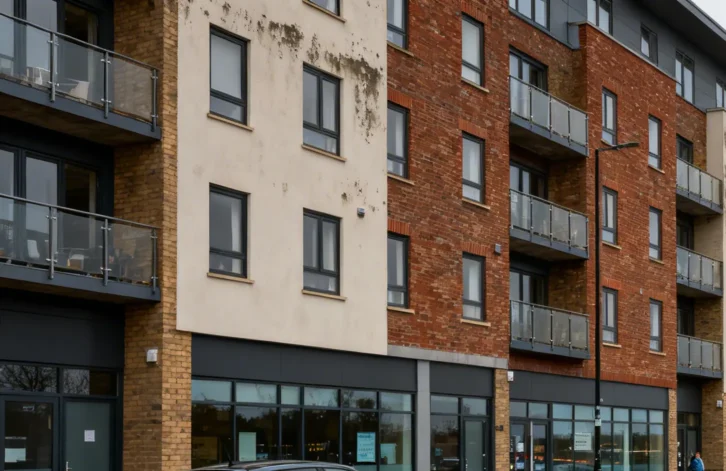
United Trust Bank has provided a £35 million refinancing facility for a 169-apartment build-to-rent scheme near Heathrow Airport, as the development transitions from construction to operational status.
The structured loan refinances an existing facility on the £56 million development, which was delivered by international real estate developer Gold Wynn. The project comprises 169 apartments alongside ground-floor commercial space.
Transaction structure
The three-year facility was arranged through UTB’s structured property finance team. At the time of lending, construction was substantially complete, though all apartments required final regulatory sign-off before tenants could occupy the units.
According to Martin Cameron, business development director at United Trust Bank, the lender provides funding solutions ranging from £2.5 million to £35 million for residential, commercial and mixed-use projects.
The refinancing is designed to reduce financing costs for Gold Wynn while allowing the developer to release equity for deployment in its wider London development pipeline.
Market context
The transaction reflects continued lender appetite for build-to-rent assets, even during the stabilisation phase when properties have yet to generate rental income. The scheme’s proximity to Heathrow Airport positions it to capture demand from airport workers and business travellers.
Mark Shooter, director of Gold Wynn Heathrow, said the facility reduced finance costs while positioning the asset for long-term hold. He described the process as “efficient” and “collaborative”.
Build-to-rent sector activity
The deal adds to growing transaction activity in the build-to-rent sector, where developers and institutional investors have increasingly sought refinancing solutions to bridge the gap between construction completion and full occupancy.
United Trust Bank’s involvement in the transaction demonstrates specialist lenders’ willingness to provide capital during the pre-stabilisation period, when traditional lenders may require proof of rental income and occupancy levels.
The £35 million loan represents 62.5% of the scheme’s £56 million gross development value, indicating a relatively conservative loan-to-value ratio for a near-complete asset.