
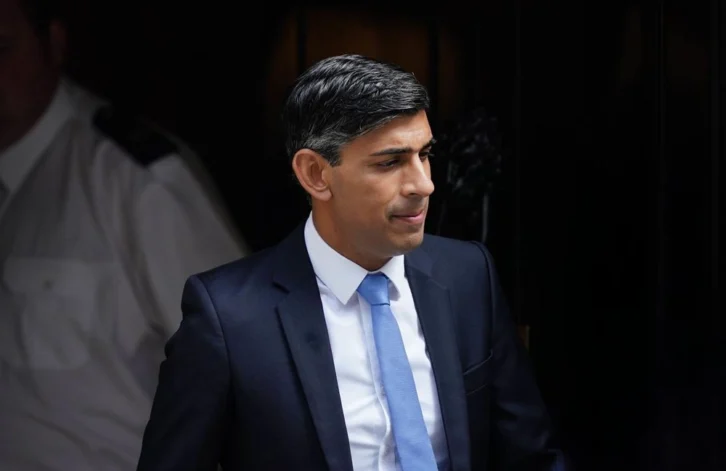
It seems like Rishi Sunak has pulled the rug under everyone’s feet with the timing of the General Election on July 4th.
It’s unclear exactly why he decided to call it a few months earlier than expected – maybe he feared a plot to install Penny Mordaunt as PM – but in my view it’s borderline irresponsible when such key pieces of legislation were still on the table.
None more so than the Renters (Reform) Bill, which had been watered down to the degree where I think most tenants and landlords would have gotten on board with it.
Section 21 and other lost measures
Abolishing Section 21 was always going to be controversial, but we already had the amendment that the courts would be reviewed before the ban took place – which badly needs to happen by the way.
Then we had other changes, which in my view were mainly quality of life alterations: tenants were going to be able to challenge unjust rent increases via tribunal to stop landlords using rent increases to evict tenants by proxy; there was going to be a new national landlord register to increase accountability; there was going to be a grounds for eviction for landlords who want to sell their properties or move back in; and tenants were going to be able to keep pets as standard as long as they took out pet insurance.
Now it looks like it will be up to Labour to get similar measures done, as they have committed to banning Section 21.
Some may argue that these measures would have handed tenants too much power, but if the Tories – many of whom are landlords – wanted to pass legislation to ensure there was a good balance between tenant and landlord rights, they really should have got this done.
Sunak’s responsibility
Is it Sunak’s fault that the Renters (Reform) Bill has taken forever to pass?
Perhaps he’s been dealt a poor hand. He came into a fragmented government with a manifesto that wasn’t his.
But you’d think a stronger PM could have accelerated its route through parliament, rather than bowing to backbencher concerns time and time again.
Also, perhaps there would have been more urgency from other members of his party had they known he was planning to call this election now.
Broken promises
I think the loss of such major legislation sends a terrible message for the Conservatives ahead of this General Election – the message is you may as well take their manifesto pledges with a pinch of salt, if the last one is anything to go by.
It was back in the 2019 manifesto that the Tories vowed to “bring in a Better Deal for Renters, including abolishing ‘no fault’ [Section 21] evictions”. Now we’re being told they’ve run out of time? It’s been nearly five years.
You could build four Empire State Buildings in the time it’s taken to not pass this legislation.
It’s not just the Renters (Reform) Bill too. Looking at the manifesto, so many promises have been broken.
The 2019 manifesto pledged to “continue our progress towards our target of 300,000 homes a year by the mid-2020s”, but this has been brushed under the carpet.
Meanwhile there was a pledge to reach net zero by 2050 – but the Green Alliance says “the UK remains off track” to meet this deadline.
It was Sunak of course who dropped UK housing targets, as well as u-turning on the policy to introduce minimum EPC standards for rental properties, at a time when saving on energy costs has become more crucial.
Then there’s the debacle of HS2, Liz Truss’s economic incompetence, Boris Johnson and his lockdown parties – the chaos has rumbled on in this parliament.
Given this context, there is no world that makes sense for the UK public to vote the Conservatives back into power in July.
Michael Gove’s departure
 It’s perhaps unsurprising that 78 Conservative MPs aren’t even going to try and win back their seats.
The most notable figure departing is Michael Gove, whom I think deserves some credit for his role as housing secretary, or ‘levelling up secretary’, as the government started insisting we label him.
Gove has ruffled feathers in his time on the frontline of politics, but I don’t think you can question his drive and work-ethic.
It was Gove who pushed through reforms which forced cladding issues to be remediated, while he pushed hard for leasehold ground rents to be reduced to a peppercorn rent before being overruled. He also took the manifesto pledge of abolishing Section 21 evictions seriously.
He’s not been shy about pointing the finger at councils for blocking housing developments, he took on bad social housing providers after the sad death of toddler Awaab Ishak, as well as having the vision of turning Cambridge into the UK’s answer to Silicon Valley.
You may not agree with everything he’s done and I know many in the education sector have mixed feelings about his legacy, while I thoroughly disagree with him on Brexit. However, his ballsy approach has been refreshing at a time where the political vision has become clouded in the Conservative Party, and with Labour’s ming vase strategy making for quite dull reading in the past few months.
Gove has only had limited time to make his mark as housing secretary. He was only appointed in October 2022, and you wonder whether the fate of the Renters (Reform) Bill may have been different had he been in the post for longer. Was he taken by the surprise at Rishi Sunak’s sudden call for a General Election, just like the rest of us?