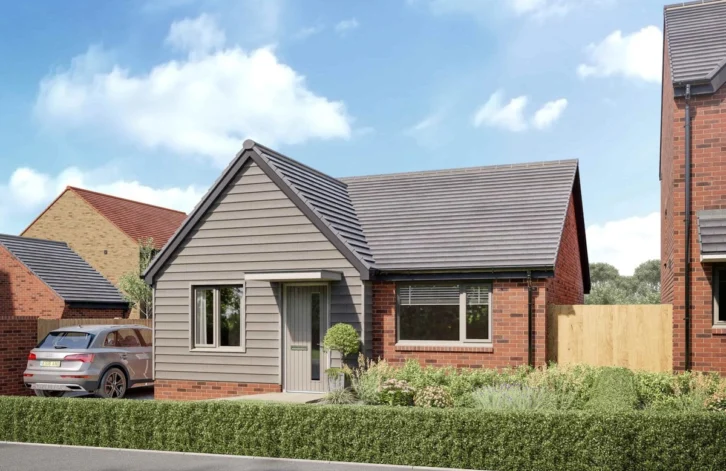
Britain is running short of the kind of homes many older movers say they want most: practical, single-storey properties that are easier to manage in later life.
The decline has been dramatic. According to the National House Building Council (NHBC), bungalows accounted for 11% of new homes built in 1990. By 2024, that share had fallen to just 1%. At the same time, existing bungalows are increasingly being redeveloped into larger, multi-storey homes, further shrinking the stock available to downsizers and older buyers.
This matters because the demand has not gone away. If anything, it is becoming more urgent.
A supply problem hiding in plain sight
New research from HomeOwners Alliance found that 1.2 million homeowners aged 55 and over have abandoned plans to move in the past two years. Among this group, 38% say a bungalow would be their preferred next home, making it the most popular property type for later-life movers and retirees. Yet many feel they simply cannot find one that suits their needs.
That disconnect between demand and supply is starting to create a more obvious structural issue in the market. Older homeowners are remaining in homes that may no longer suit them, not always because they want to, but because the alternatives are too limited, too expensive, or too stressful to secure.
The consequences are wider than individual frustration. When older households cannot move into more suitable homes, family houses are less likely to come back onto the market, chains become harder to unlock, and pressure builds across multiple parts of the housing system.
Why the market is not delivering more bungalows
From a developer’s perspective, the economics are easy to understand. On the same plot of land, a two-storey house will usually generate a higher return than a bungalow, which makes traditional single-storey homes harder to justify commercially, especially where land values are strong.
That helps explain why existing bungalows are increasingly vulnerable to redevelopment. Hamptons’ analysis of EPC data, reported by The Telegraph, found that 5,594 bungalows were knocked down and rebuilt in England and Wales between 2020 and 2025, and in 74% of cases they were replaced by houses rather than another bungalow.
Scarcity is also feeding through into pricing, with bungalows often commanding a premium in local markets where supply is particularly tight. They appeal to a much wider buyer pool now, from downsizers to families and flexible workers, because of their practicality, adaptability and long-term convenience.
The downsizer dilemma
For many later-life movers, the appeal of a bungalow is simple. It offers step-free living, easier maintenance, fewer unused rooms and, in many cases, lower ongoing demands on time, energy and money.
But for many would-be downsizers, the actual moving process is part of the problem too. HomeOwners Alliance found that stress and upheaval were among the biggest barriers holding older homeowners back, alongside the shortage of suitable homes itself.
That means the challenge is not just about building more single-storey homes. It’s also about creating realistic, accessible routes into later-life housing that feel manageable and attractive to the people who need them. For some buyers, practical moving support, such as part exchange, can also help make the transition feel more achievable.
Park homes are becoming part of that conversation
This is where residential park homes are increasingly entering the picture.
They are not a direct substitute for the traditional bungalow market, and they don’t suit every buyer, but they do offer something that mainstream housing supply is often failing to provide: single-storey living in a manageable home, usually in a community specifically designed around later-life convenience.
Modern residential park homes are built to BS 3632 standards for year-round living, with insulation, heating and layouts designed for full-time occupation. Many are located on age-restricted (typically 45 or 50 and over) residential parks and appeal to buyers who want less upkeep, lower running costs and a stronger sense of community than they may find in a larger family house.
For equity-rich downsizers, park homes can also offer a markedly lower entry price than a conventional bungalow in the same region. That affordability, combined with the practical appeal of step-free living, is one reason the sector is attracting more attention.
Operators such as Tingdene Residential Parks, which runs residential park communities across England, are seeing demand from buyers who are not necessarily looking for a “retirement property” in the traditional sense. They are looking for a simpler, more suitable home that reflects how they want to live next.
There are, of course, important differences. Park homes are usually bought outright, rather than with a conventional mortgage, and residents own the home but not the land beneath it. Buyers also need to understand pitch fees, site rules and the legal structure of residential park ownership. But as part of the broader single-storey housing picture, park homes are filling a gap that the mainstream market has left open.
A housing issue that needs a broader response
Residential park homes may help meet part of the demand, but they are not the whole answer.
If Britain is serious about supporting an ageing population to live independently and move at the right time, then single-storey housing needs to be taken more seriously across the board. That could mean stronger protection for existing bungalow stock, planning policies that encourage more accessible homes in new developments, or greater recognition of later-life housing as a mainstream housing issue rather than a specialist niche.
The demographic case is only getting stronger. The UK’s population is ageing, and housing preferences are shifting with it. Yet the supply of practical, manageable single-storey homes continues to move in the opposite direction.
That is creating a clear market opportunity, but also a policy challenge. Because if the market continues to underdeliver the kind of homes many older buyers want, the effects will be felt far beyond the downsizer segment alone.