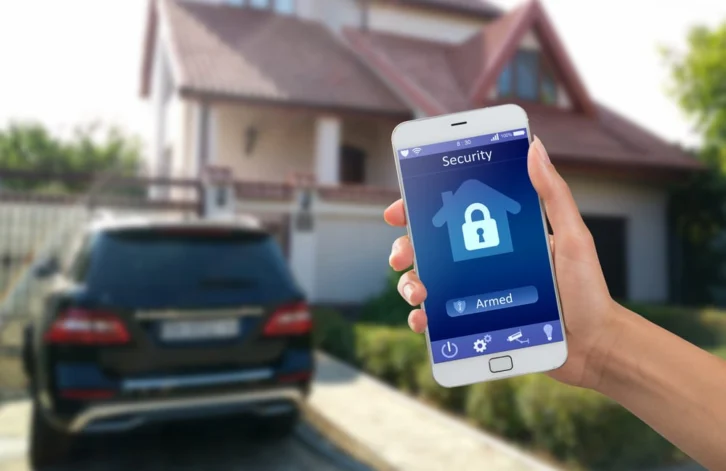
Ask most property owners why they haven’t replaced an old alarm, and cost rarely comes first. It’s the disruption: cables chased through plaster, a contractor in the house for two days, tenants to warn, and in an older building, the worry that someone will ask whether you’re allowed to drill at all. So the panel in the hallway stays, beeping about a low battery, until a claim is queried or a flat sits empty for a month.
Wireless hardware has taken most of that excuse away. A system that runs on radio instead of cable can be fitted in an afternoon and taken with you when you sell or re-let. What follows is a typical retrofit, using Ajax home security as the worked example, with notes on where owners tend to go wrong.
Start with the hub
Everything hangs off the hub, so choose it first. The Ajax Hub 2 Plus handles up to 200 devices, far more than most houses need, and connects over Ethernet, Wi-Fi, and two SIM cards. That matters in rentals, where the broadband is often cancelled the day a tenant leaves. If the line drops, the hub falls back to cellular and carries on. It also runs for up to 15 hours on its own battery if the power goes.
Put it somewhere central and unremarkable, such as a hall cupboard, rather than next to the front door. Sensors talk to it by radio, so thick walls matter more than wiring routes. The app shows signal strength for each device, so check it before you fix anything permanently.
Doors and windows
Replace the old magnetic contacts first. DoorProtect is a two-part sensor, one half on the frame and one on the door, held on with adhesive or a couple of screws. The battery is rated for up to seven years, which helps if you manage a dozen flats and don’t fancy a battery round every autumn. Fit one to every external door, including the one between the garage and the house, which is the entry point owners forget most often.
For ground-floor glazing, GlassProtect listens for the sound of breaking glass, and one unit can cover several windows in the same room. That’s easier than fitting a contact to every sash.
Inside
Motion detection is where a retrofit pays off quickest. MotionCam takes a short series of photos when it triggers and sends them to the app, so you can see what set it off before deciding whether to phone anyone. For a landlord that means fewer pointless call-outs, and for a vacant property it means you can check on a viewing that wasn’t supposed to happen. It ignores pets up to 20 kg, though it’s worth testing the position before you trust it. Mount it high in a corner, covering the route in from the front door.
Fire and water
Burglary gets the attention, but water and fire do more damage. A leak that runs all weekend in an empty flat can cost more than most break-ins. LeakProtect sits on the floor under a sink or behind a washing machine and raises the alarm as soon as it gets wet. It needs no fixings.
FireProtect 2 combines heat, smoke, and carbon monoxide detection in one unit and reports through the same hub. Landlords already have legal duties on alarms, so check that the model you choose meets the requirements where the property is. A connected detector adds the alert, so you hear about a fire on your phone rather than from a neighbour, but it doesn’t replace compliance.
Outside
MotionCam Outdoor covers drives and side passages with the same photo verification, and a StreetSiren over the door handles deterrence. Neither needs a cable through the wall, which is usually the expensive part of an external install.
Before the first screw goes in
- Test before you remove anything. Leave the old system running until the new one has been tested for a week or two. Trigger every sensor and confirm the alert reaches every phone that should get it.
- Set up access properly. A letting agent, cleaner, or contractor can be given limited rights instead of your own login and removed the day they stop working for you.
- Tell your insurer. Some will adjust terms, and others will want certification if the system is monitored.
- Mount with care in listed buildings. If the property is listed or in a conservation area, adhesive mounting is usually the safer route.
Don’t buy everything at once. A hub, a few door contacts, one motion sensor and a leak detector make a sensible first stage. Add the rest once you’ve seen how the alerts behave in daily use.
Rewiring was always the costly, disruptive part of an upgrade. Take it away, and what’s left is a few hours with a screwdriver and some careful testing. For most owners, that’s an easier decision than it used to be.