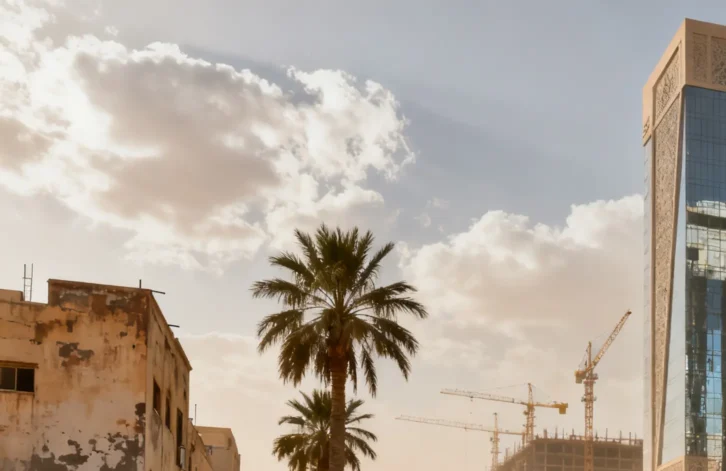
Saudi Arabia has opened its real estate market to foreign freehold ownership for the first time, allowing international investors to purchase property outright in designated zones across the Kingdom.
The reforms, implemented under the country’s Vision 2030 economic diversification programme, mark a significant shift from previous restrictions that limited foreigners to leasehold arrangements or corporate partnerships.
Legal framework and ownership rights
The updated Real Estate Ownership and Investment Law, revised in 2023, permits non-Saudi nationals to acquire complete freehold rights to residential, commercial, and mixed-use properties in approved locations. Buyers can register properties in their names through the national Absher platform.
Designated areas for foreign ownership include central zones in Riyadh and Jeddah, as well as large-scale development projects such as NEOM, The Line, Diriyah Gate, and Qiddiya. Foreign individuals with valid residency or investment visas, as well as corporate investors holding Saudi investment licences, are eligible to purchase.
Property purchases in qualifying developments may grant buyers renewable long-term residency permits for themselves and immediate family members, alongside the right to sponsor dependents and access local services.
Tax structure and financial considerations
The Kingdom does not levy personal income tax or capital gains tax on property transactions. Ownership transfers incur minimal administrative fees, with no stamp duty applied to most purchases. Foreign businesses acquiring real estate can access tax deductions on property-related expenses, with reduced corporate tax rates available in special economic zones.
The government has guaranteed foreign ownership rights under Saudi commercial law, with transparent dispute resolution processes in place.
Investment locations and project types
Riyadh, the capital, is experiencing demand for apartments and mixed-use communities, particularly near the King Salman Park and the Riyadh Metro network. NEOM, spanning 26,000 square kilometres in the northwest, encompasses The Line, Oxagon, and Trojena developments.
Jeddah offers waterfront properties and serviced apartments along the Red Sea coast. Diriyah Gate combines heritage architecture with contemporary residential and retail space, whilst Red Sea Global and Qiddiya are being developed as tourism-focused zones with branded residences.
The Saudi population is forecast to exceed 40 million by 2030, with Riyadh expected to double in size and population. Foreign direct investment has reached approximately $30 billion annually, supported by funding from the Public Investment Fund.
Rental yields and market performance
Rental returns in the Saudi market currently range from 6% to 9% annually, varying by location and property type. Freehold properties in Riyadh and NEOM are projected to appreciate as infrastructure projects reach completion over the next five years.
Foreign owners can sell properties, lease them on short-term or long-term contracts, transfer ownership, or reinvest in other Saudi developments without restriction. The regulatory changes have drawn comparisons to property market liberalisation seen in other emerging markets.
Purchase process and documentation
The acquisition process involves selecting an approved project, conducting due diligence on developer credentials and timelines, completing legal documentation under Saudi property law, and registering title with the real estate system. Buyers may then apply for investor residency where eligible.
Select Saudi banks and developers now offer payment plans and instalment options to approved foreign investors. Off-plan purchases are available in master-planned developments, with completion schedules extending over the next decade.
Market outlook
The freehold reforms support three policy objectives: attracting foreign capital for economic diversification, accelerating urban development, and encouraging expatriate settlement. The changes represent a significant shift in the Kingdom’s approach to international property investment, following decades of restricted access.
Industry observers note the reforms arrive as global property markets face uncertainty, potentially positioning Saudi Arabia as an alternative destination for investors seeking diversification in the Middle East region.