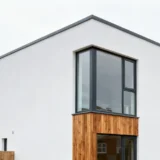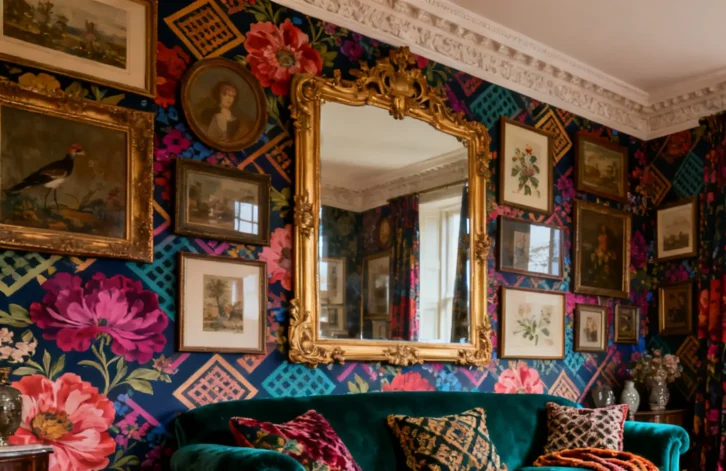
A growing number of UK property listings are featuring maximalist interior design, marking a departure from the minimalist aesthetic that has dominated the residential market in recent years. Properties ranging from £149,000 to £11 million are showcasing bold patterns, saturated colours and layered decorative elements.
The design approach represents a counter-trend to the neutral palettes and decluttered spaces that have characterised property marketing over the past decade. Estate agents report that homes with distinctive interiors are generating increased engagement from potential buyers seeking properties with character.
Market examples across price points
Recent listings demonstrate the breadth of the trend across the UK market. In Edinburgh’s New Town, a four-bedroom townhouse on Drummond Place is listed at £1.95 million through Macgregor. The property features statement wallpapers throughout, including banana leaf designs in the hallway and hand-printed patterns in the drawing room.
In North Kensington, a four-bedroom Edwardian home on Balliol Road is marketed at £2.995 million by Rigby & Marchant. The property includes mint green kitchen cabinetry, Moroccan tiles and mixed-pattern reception rooms.
At the lower end of the price spectrum, a two-bedroom stone cottage on George Street in Whithorn, Dumfries and Galloway, is listed at offers around £149,000 through South West Property Centre. The property features floral wallpaper throughout the bathroom and patterned kitchen units.
Regional distribution
The trend appears across multiple UK regions. In Somerset, a seven-bedroom country house in Theale is listed at £1.45 million through Roderick Thomas. The property, dating back approximately 250 years, includes a dining room with safari-themed wallpaper.
While property company insolvencies have reached decade highs, certain segments of the market continue to show activity. Properties with distinctive interiors may appeal to buyers seeking differentiation in a competitive market, though this approach contrasts with traditional staging advice that typically favours neutral presentations.
The shift towards more decorative interiors comes as estate agents reassess their marketing strategies amid changing market conditions. Properties with strong visual identity may generate more engagement on listing portals, though the approach carries risk if the design does not align with buyer preferences.
Design characteristics
Common elements in these listings include statement wallpapers covering multiple surfaces, mixed patterns within single rooms, saturated colour palettes, and decorative objects used as focal points. Some properties feature themed rooms, such as safari or circus-inspired designs.
The approach differs from conventional property presentation guidance, which typically recommends neutral decoration to appeal to the broadest possible buyer base. Whether maximalist interiors support or hinder sale prices and time on market remains unclear, as no comparative sales data was provided.
The trend reflects broader shifts in interior design preferences, though its impact on property values and marketability has not been quantified. Properties with highly personalised interiors may appeal to specific buyer segments while potentially limiting overall market appeal.