Hinckley and Bosworth Borough Council has moved forward with plans to restrict Houses in Multiple Occupation (HMOs) in several Hinckley streets, despite a consultation that revealed significant divisions among residents and raised questions about the policy’s underlying motivations.
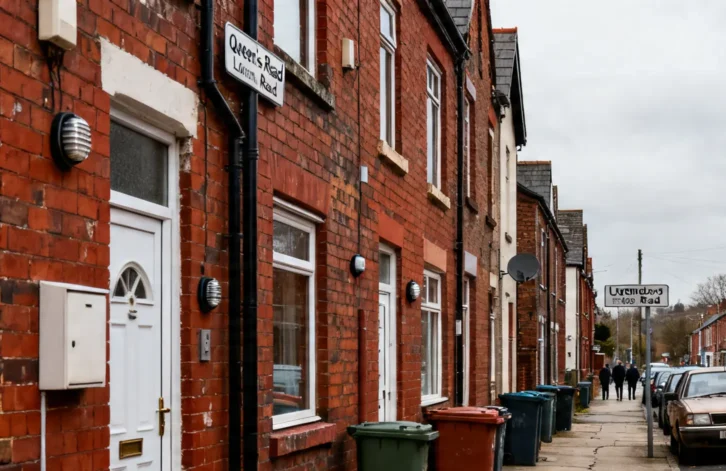
The proposed Article 4 Direction, which received support from 65% of 616 respondents, will require planning permission for new HMOs on roads including Queen’s Road, London Road and Clarence Road. The measure aims to give the council greater control over the conversion of properties into shared housing.
Consultation reveals local divisions
Support for the restrictions varied significantly by location. Among residents outside the affected areas, 84% backed the proposals, whilst 51% of those living within the designated zones opposed them.
The consultation responses highlighted concerns about “overcrowding, noise and disruption to neighbours”, “parking congestion on narrow terraced streets” and the “loss of family homes and shift toward high-turnover populations”. Some submissions also referenced immigration-related concerns, including what respondents described as worries about “unvetted or illegal migrants, especially near schools” and “safety concerns for women and children”.
Market implications for landlords
The restrictions come at a time when buy-to-let lending has risen 18% with remortgaging activity dominating the sector. HMO landlords in the affected areas will now need to navigate additional planning requirements, potentially impacting investment decisions in the Leicestershire market.
Respondents acknowledged that HMOs “provide affordable accommodation for single people, young professionals [and] students” and represent an “efficient use of existing housing and support the local economy”. However, critics of the Article 4 Direction argued it was “politically motivated or influenced by anti-immigration sentiment” and that the “evidence for Article 4 is weak, outdated, or incomplete”.
Council’s position
Cllr Stuart Bray stated the council would proceed with the restrictions but emphasised that any expansion must be evidence-led and targeted at areas with specific problems. He stressed that not all HMOs are designated for the asylum dispersal scheme and that they remain “an essential type of housing for local people”.
According to the Local Democracy Reporting Service, the Article 4 Direction will apply to multiple roads in Hinckley. The policy reflects broader tensions in the UK property market as local authorities seek to balance housing needs with community concerns about shared accommodation.
The implementation of Article 4 Directions has become increasingly common across UK local authorities seeking to manage HMO concentrations, though the Hinckley consultation has highlighted how such policies can become entangled with wider debates about migration and community composition.