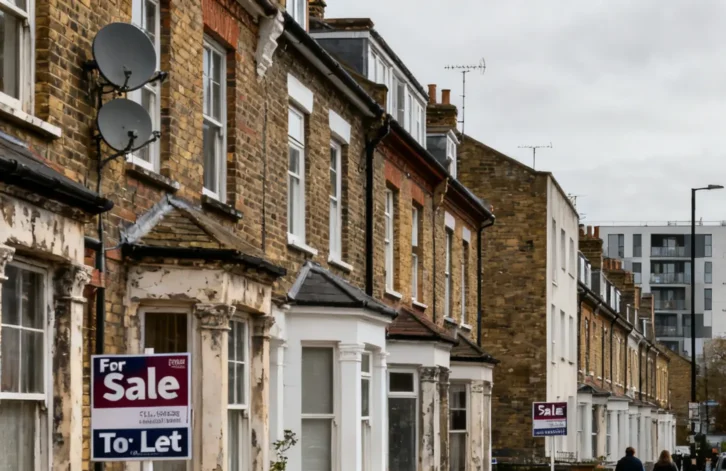
A proposal to replace stamp duty and council tax with an annual property wealth tax has been put forward by the Centre for London as a potential solution to the capital’s housing challenges.
The thinktank’s report suggests that a proportional property tax (PPT) could encourage downsizing, raise funds for social housing, and help renters save for deposits. The research highlights that house prices in London now stand at approximately 12 times average earnings, up from seven times in the early 2000s.
Growing inequality in housing space
The report found that average floor space per person rose by almost 30% between 2004 and 2023, but this additional space went disproportionately to higher-income owner-occupiers. Households in the top 20% of incomes saw a 27% rise in space owned, while the bottom 40% experienced only a 6% increase.
According to the Centre for London, homelessness costs £5.5m per day and record numbers of Londoners are living in temporary accommodation. A third of children live in poverty after housing costs are accounted for, and businesses have cited housing unaffordability as a constraint on growth, investment and talent.
Rob Anderson, director of research at the Centre for London and co-author of the report, stated: “By every metric that matters, the housing crisis is at its worst.”
Proposed tax structure
Under the PPT system, homeowners would pay tax calculated as a percentage of their property’s value. Properties worth up to £800,000 would face a base rate of 0.39%. This rate increases for higher-value homes, with those worth up to £999,999 paying an additional 0.01% charge. Properties valued over £1m would pay an additional 0.02% increment for every £200,000 up to a value of £5m.
The report provides examples of the financial impact: a £500,000 home in band D in Greenwich would pay £1,950 annually under PPT, saving £15,302 over 10 years compared with current council tax and stamp duty land tax (SDLT). A £5m home in band H in Westminster would pay £41,000 annually, saving £86,792 over the same period.
Private and social renters would no longer pay council tax under the proposal, saving the typical renter more than £1,890 per year. First-time buyers would save £8,593 across five years of ownership with the removal of stamp duty.
Asset-rich but cash-poor homeowners, such as those downsizing whose properties have risen significantly in value, would be able to defer the transition to PPT for up to a decade and continue with council tax, with the remainder payable on property sale.
Market impact projections
The Centre for London estimates that removing stamp duty on owner-occupiers moving into their primary home would release an additional 79,000 homes per year. The thinktank projects the system could fund 106,000 social and affordable homes over the next decade.
Anderson noted that stamp duty has a disruptive effect on the housing market and both stamp duty and council tax act as incentives to hold on to property. The abolition of council tax, which remains pegged to 1991 values, would lift a financial burden from renters in London’s rental market, enabling them to save more easily for deposits.
The average deposit for first-time buyers purchasing without family assistance in London reached almost £150,000 in 2024. House prices in the capital have risen by more than 200% since 2002.
Beyond supply targets
While acknowledging that building more homes remains necessary, Anderson emphasised that the housing challenge extends beyond simple supply shortages. “London can build more homes and it must. But if housing policy only focuses on increasing headline supply numbers and beating delivery targets, we risk missing the real problem: a housing system which is not delivering enough homes overall,” he said.
The proposal joins broader discussions about housing policy reform in the capital, as policymakers and industry professionals seek solutions to affordability and access challenges affecting buyers, renters and businesses.