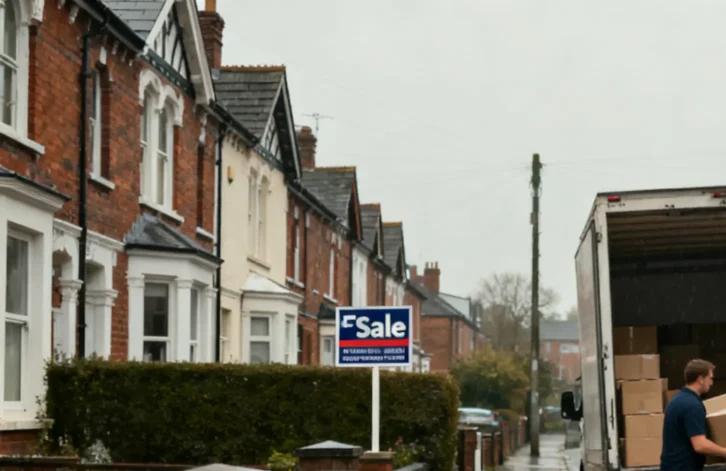
The cost of moving home in England has declined from its 2025 peak but remains significantly elevated compared to historical levels, according to new data from property comparison website reallymoving.
A typical home move in England now costs £17,413 in upfront expenses, representing a 2.3% decrease from the previous year’s record high. The reduction has been driven primarily by moderating property prices, which have reduced percentage-based costs such as Stamp Duty and estate agency fees.
Key cost components
The analysis, based on 204,000 home moving quotes, examined the combined costs of buying and selling a property, including Stamp Duty, conveyancing, estate agent fees, a Level 2 RICS Homebuyer survey, an Energy Performance Certificate (EPC) and removals.
The median purchase price fell from £395,000 to £390,000 this year, reducing the typical Stamp Duty bill by £250. The median sale price dropped from £325,000 to £315,000, cutting average estate agent fees by £142. This represents a total saving of £418 for homeowners compared to 2025.
Removals costs showed the largest percentage change, falling nearly 12% from £709 to £624 for moves under 30 miles, likely reflecting increased competition among removals firms amid lower transaction volumes. These reductions offset a 2.7% increase in conveyancing costs from £2,182 to £2,241.
Long-term trends
Despite the recent decline, moving costs have risen 74% over the past decade when adjusted for inflation. A home move in 2016 cost £10,016 in today’s money, according to the research.
The findings come as the property market continues to adjust to economic pressures, with transaction volumes remaining suppressed compared to historical averages.
First-time buyers face a more geographically uniform cost structure due to Stamp Duty exemptions up to £300,000. Excluding London, the cost of buying a first home varies by just £200 across England, averaging £2,293.
Market implications
Rob Houghton, founder of reallymoving, noted that the £17,000-plus upfront cost creates a barrier to household mobility. “When households face an upfront bill of more than £17,000 simply to buy and sell, particularly during an extended cost-of-living crisis such as this, many decide to stay where they are even if their home no longer suits their needs,” he said.
The elevated moving costs affect wider economic activity beyond the immediate housing market. Reduced transaction volumes impact conveyancers, surveyors, estate agents, removals firms, tradespeople and retailers, with the effects rippling through the property sector. This trend is evident across various segments, including buy-to-let transactions and property development financing.
The data suggests that while short-term cost pressures have eased slightly, the structural increase in moving expenses over the past decade continues to constrain market activity and household mobility across England.