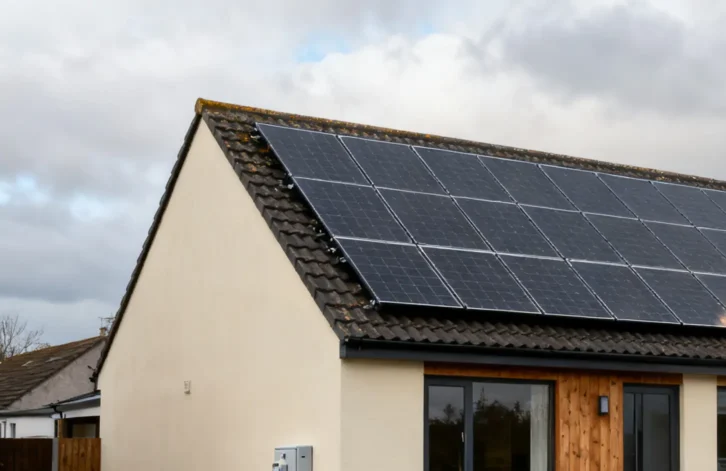
More than 400,000 British households have collectively earned almost £100 million over the past year by exporting surplus solar electricity to the grid through Octopus Energy’s export tariff schemes.
According to data released by the energy supplier, customers received an average payment of £244 during the 12-month period, with households exporting over 825 GWh of electricity to the grid—equivalent to the annual output of a medium-sized gas-fired power station.
Rising demand for solar installations
Enquiries for domestic solar panel installations increased significantly during the UK’s summer months, with Octopus Energy reporting nearly 74,000 enquiries during May, June and July. This represents a 34% increase compared with the same period in 2025. On 26 June, the year’s hottest day at that point, solar enquiries reached 50% above the monthly average.
Battery storage systems saw even sharper growth, with demand for standalone battery installations rising 630% year-on-year over the three-month period. These systems enable households to store lower-cost electricity for later use or sell surplus power when wholesale prices are higher.
Impact on property values
The financial returns from solar installations may influence property investment decisions, particularly as buy-to-let investors navigate current market conditions. With average annual returns of £244 per household, solar panels represent an additional income stream for property owners, though the capital costs and payback periods vary by installation size and location.
Rebecca Dibb-Simkin, chief product and marketing officer at Octopus Energy, said: “Over 400,000 UK households on Octopus tariffs are already generating their own clean energy, and that number just keeps climbing.”
Energy market context
Solar power now accounts for a record 14.4% of Britain’s electricity demand in 2026, according to Octopus Energy’s figures covering rooftop and ground-mounted installations. The data suggests that financial considerations are becoming increasingly important for homeowners alongside environmental and energy security factors.
The trend occurs as the wider property market faces uncertainty, with homeowners potentially viewing solar installations as a way to offset rising energy costs and add value to their properties.
The figures indicate that solar export tariffs are creating a measurable revenue stream for households with installations, though the long-term impact on property values and investment returns remains to be fully established as the market develops.