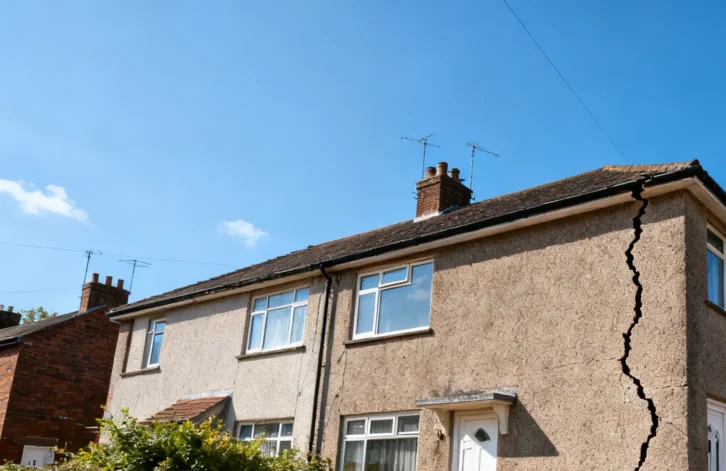
UK insurers are reporting a significant increase in subsidence claims following the hottest summer on record, with implications for property values and insurance costs across vulnerable regions. Hastings Direct recorded a near 140% jump in August claims compared to the previous year, reaching an all-time high for the month.
Insurance firms have experienced a surge in calls, online queries and claims during the five heatwaves that followed the warmest spring ever recorded in England and Wales. While subsidence claims typically peak during late summer and autumn, this year saw numbers rise earlier during the summer months.
Geographic risk patterns
The British Geological Survey has identified millions of homes at risk of subsidence due to climate change. The most vulnerable areas include London, Essex, Kent and a corridor of land stretching from Oxford to the Wash on England’s east coast. As hotter, drier summers become more frequent, ground beneath properties can shrink and drag down foundations, with older properties facing greater risk.
Hastings Direct, which serves 4.8 million home and motor insurance customers, stated that after two unusually dry summers, subsidence activity has increased significantly. The company predicted elevated claim volumes would continue into autumn unless sustained rainfall restores soil moisture levels.
Financial impact
The average subsidence claim in the UK reached a record £20,000 between April and June, more than £2,000 higher than the previous year, according to the Association of British Insurers (ABI). Insurers paid out £72 million for domestic subsidence claims in that period, up from £60 million in the same quarter of 2024. Total payouts for 2025 reached £297 million, representing a 6% increase from 2024 and 89% higher than 2022 figures.
Charlie Inwood, general insurance policy adviser at the ABI, said: “Following this summer’s hot weather, it’s likely we’ll see more subsidence claims over the coming months.”
Aviva, which completed a £3.7 billion acquisition of rival Direct Line in July and now dominates the UK home insurance market, confirmed subsidence claim numbers had increased in recent months. The trend is likely to continue without significant rainfall, the company stated.
Amanda Blanc, chief executive of Aviva, said the company was reviewing reserves set aside for subsidence claims and examining pricing models and exposure management. The insurer is also investigating preventative measures homeowners can implement against subsidence and flooding damage.
Identifying subsidence
Signs of subsidence include diagonal cracks around doors and windows that widen over time, windows or doors that stick or fail to close properly, and uneven or sloping floors. Wallpaper creasing or rippling can also indicate subsidence, as can damp. Aviva noted that while small shrinkage and movement cracks are normal after hot dry weather, diagonal cracks exceeding 2.5cm in width—roughly the diameter of a £1 coin—could signal subsidence.
Axa, another home insurer, said it expected a “surge year” but could not confirm whether 2026 would set a record for subsidence claims. Adam Holland, head of retail underwriting, fraud and pricing governance at Axa UK, said: “The Met Office’s announcement about summer 2026 being the hottest on record in the UK puts the impact of climate change into sharp focus.”
The subsidence surge adds to challenges facing the UK property market amid ongoing pricing pressures, with potential implications for property valuations in affected regions. The trend may also influence buyer behaviour and lending criteria as climate-related risks become more prominent in property transactions.