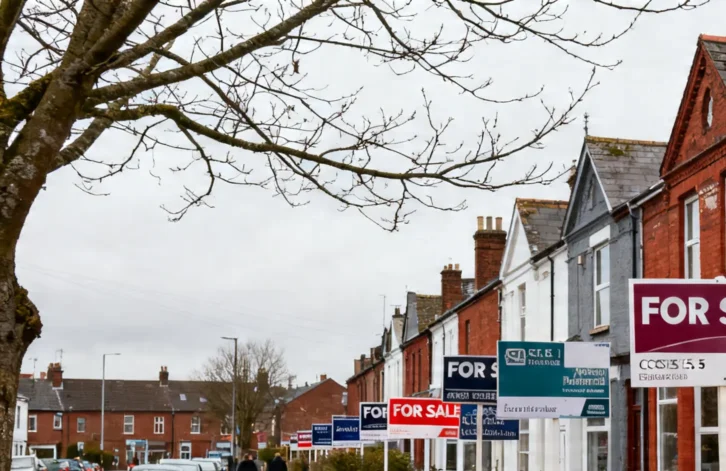
The average asking price of newly listed homes in the UK rose by 0.8% (£2,929) in April to £373,971, according to data released by Rightmove. The increase falls below the long-term April average of 1.2%, reflecting elevated borrowing costs and increased supply levels.
The number of homes for sale has reached its highest level for this time of year in more than a decade. Despite these market forces, activity has remained relatively stable, with buyer demand in April to date 7% lower than the same period last year but broadly in line with trends seen earlier in 2026.
Sales agreed are 3% behind last year’s figures, while new listings are 1% lower but still 13% higher than in 2024. The increased supply of homes has created a more balanced market, particularly affecting the flat sector.
Mortgage rates impact buyer behaviour
Tom Bill, head of UK residential research at Knight Frank, noted that the full impact of higher borrowing costs has yet to materialise. “The fact mortgage offers last for several months means the spike in borrowing costs has not fully kicked in yet for buyers,” he said. “A seasonal increase in activity, combined with the fact that supply fell more notably than demand in response to the Middle East conflict, has kept upwards pressure on prices.”
Bill added that inflationary pressure from higher energy prices will likely maintain upward pressure on rates and keep house prices in check for several months, though he expects a smaller impact on transaction levels. Recent data shows mortgage rates beginning to show signs of easing after weeks of increases.
Regional variations emerge
Marc von Grundherr, director of Benham and Reeves, observed that London has been slower to respond to improving conditions. “The combination of heightened geopolitical uncertainty and the increase in mortgage rates has understandably caused some buyers to pause for thought, particularly across the higher end of the market where affordability is already stretched,” he said.
However, he noted that wage growth continues to outpace house price inflation, and lending criteria have improved. Mark Wiggin, director of Mark Wiggin Estate Agents, emphasised the importance of realistic pricing in the current environment. “Buyers start with three things: the price, the photos and how long a home’s been listed. If something’s been on the market for more than a few months, buyers immediately assume it’s overpriced,” he said.
Family homes outperform flats
Polly Ogden Duffy, managing director at John D Wood & Co, reported that the family housing market continues to perform strongly, especially in areas with sought-after schools where demand can outstrip supply and result in multiple bids. She noted that flats, particularly those lingering from 2025, face more challenging conditions as buyers have greater choice.
Peter Ryder, managing director at Thorntons Property Services, said the property market across the East of Scotland and Inverness continues to show resilience. “Increased stock levels are giving buyers more choice and easing the intense competition of recent years, helping create a more balanced and sustainable market,” he said.
The data suggests the UK housing market is entering a period of moderation, with pricing discipline becoming increasingly important for sellers as supply levels rise and affordability constraints persist.