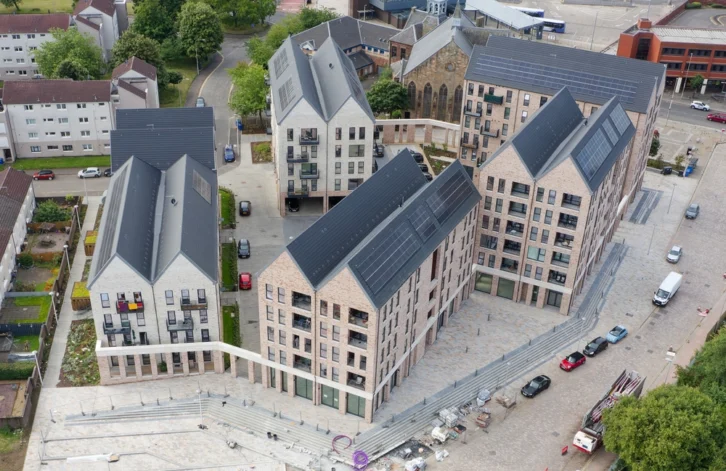
Regeneration is one of the most frequently cited reasons for investing in a city or neighbourhood.
A new transport link, commercial district or major redevelopment can alter how an area is perceived, bring in new employers and change where people want to live. In some cases, the effects can be substantial.
But regeneration is also easy to oversimplify.
A glossy masterplan does not automatically create rental demand, and a project scheduled to complete in ten years does not necessarily improve an investment bought today. For landlords, the real question is not whether regeneration is happening, but how it changes the local rental market and whether that change strengthens the underlying investment case.
Regeneration Can Change Who Wants to Live in an Area
The most important effect of regeneration is often not the new buildings themselves. It is the people and activity they bring with them.
A large commercial development can create employment. New office space may attract professional workers. Universities and research facilities can increase student and graduate populations. Restaurants, public spaces and leisure facilities can make an area more attractive to people who previously would not have considered living there.
That matters to landlords because rental property ultimately depends on tenant demand.
An area with more jobs, better amenities and stronger transport connections may be able to attract a broader range of tenants than it did before. The potential tenant base can shift from being heavily dependent on one group to serving professionals, students, families or people moving into the area for work.
For investors, that change can be more meaningful than the development itself.
Transport Improvements Can Redraw a Rental Market
Transport is one of the clearest examples of how regeneration can alter demand.
An area that feels inconvenient when a journey into the city centre takes 45 minutes can become much more attractive if a new rail, tram or bus connection cuts that journey significantly.
This can change where tenants are prepared to live.
Improved transport may also reduce the premium attached to living in the most central locations. Tenants who previously felt they had to rent close to employment hubs may consider areas further out if commuting becomes easier.
For landlords, that can open up new locations where property prices remain lower but access to employment and amenities has improved.
The timing still matters. A transport scheme that is funded and under construction is very different from one that exists only as a proposal.
Employment Is Often the Missing Link
Regeneration becomes particularly relevant to buy-to-let when it is connected to employment.
Housing demand is much easier to sustain when people have a reason to move into an area and remain there.
New business districts, hospitals, universities, technology hubs and large employers can all influence the rental market. They create jobs directly, while also supporting surrounding businesses and services.
That does not mean every new workplace immediately translates into rising rents. The effect depends on the scale of employment, the type of workers being attracted and the amount of housing available nearby.
A large development may bring thousands of workers into an area, but if substantial residential supply is being delivered at the same time, landlords still need to understand how those two sides of the market interact.
Liverpool Shows Why the Detail Matters
Liverpool provides a useful example of why regeneration should be examined at neighbourhood level rather than treated as a city-wide label.
The city has seen substantial investment across waterfront areas, commercial districts, education and leisure, but the impact is not uniform. Some neighbourhoods have benefited from improved public spaces and stronger professional rental demand, while others continue to serve very different tenant markets.
That means the case for buy-to-let Liverpool is not simply that the city is regenerating. The more useful question is which areas are changing, what is driving that change and whether the local rental market can absorb new supply.
A city-centre apartment, a property near a university and a suburban family home may all sit within the same city boundary, but their investment cases can be completely different.
Regeneration is only helpful when it strengthens the fundamentals relevant to the specific property.
New Housing Supply Can Help or Hurt
One of the less discussed effects of regeneration is that it can increase competition.
A major development may improve an area while also delivering hundreds or thousands of new homes.
That can be positive if demand is rising quickly enough to absorb the additional supply. New residential development can create a stronger neighbourhood, support local shops and services and attract more people into the area.
But investors should still ask how many similar properties are entering the market.
A location receiving large numbers of nearly identical apartments may become more competitive for landlords, particularly if many are aimed at the same tenant demographic.
This is why regeneration should not be treated as an automatic signal to buy. Supply matters just as much as demand.
Regeneration Can Improve the Exit Market Too
Most buy-to-let analysis focuses on rent, but regeneration may also affect the eventual resale market.
An area with better transport, more employment and improved amenities can become more attractive to owner-occupiers as well as tenants.
That matters because a property with a broad future buyer base can offer more flexibility when the investor eventually decides to sell.
If a property appeals only to other investors, the exit market may be narrower. A home that could later attract professionals, families or first-time buyers may have a wider pool of potential purchasers.
For long-term investors, that is worth considering at the acquisition stage rather than only when the property is put back on the market.
Manchester Shows How Large-Scale Change Can Reshape Demand
Manchester is another useful example because regeneration has taken place across several different parts of the city and wider Greater Manchester area.
New residential districts, commercial development and transport improvements have changed where people live and work. That has created opportunities, but it has also made neighbourhood-level research more important.
Some areas appeal heavily to young professionals, while others attract families, students or commuters.
This is why Manchester buy-to-let properties can produce very different outcomes depending on location, property type and target tenant. Two properties a relatively short distance apart may sit within very different rental markets.
The lesson is that regeneration does not remove the need for local analysis. If anything, it makes that analysis more important because a rapidly changing area can contain both opportunities and risks.
Investors Should Separate Announcements From Delivery
Regeneration plans often sound impressive long before they are completed.
Masterplans may include new homes, offices, retail space, parks, schools and transport improvements. But large projects can be delayed, redesigned or delivered in stages over many years.
For investors, there is an important difference between:
- a concept or early-stage proposal;
- a development with planning permission;
- a funded project;
- construction already underway;
- completed infrastructure or commercial space.
The earlier the stage, the more uncertainty there is.
Buying solely because a future project is expected to transform an area can therefore be risky. The investment should still make sense under current conditions rather than depending entirely on promised future improvements.
That approach also reduces the temptation to pay a premium today for growth that may already be reflected in the asking price.
Regeneration Does Not Guarantee Capital Growth
Property values may rise in regenerating areas, but there is no automatic relationship.
Prices can be affected by interest rates, lending conditions, employment, housing supply, buyer confidence and the wider economy.
A well-executed regeneration project can strengthen a neighbourhood without producing immediate price growth. Equally, values can rise in places with little obvious regeneration because supply is limited and demand is strong.
Investors should therefore be cautious about claims that a particular scheme will “guarantee” future appreciation.
A stronger approach is to ask whether regeneration improves the underlying reasons people want to live in the area.
If it does, that may support the rental and resale markets over time. But the property still needs to be bought at a sensible price.
Look at the Wider Investment Case
Regeneration is most useful when it sits alongside other strong fundamentals.
Before buying, investors should consider:
- existing tenant demand;
- realistic rent;
- current and planned housing supply;
- local employment;
- transport;
- universities and education;
- property management costs;
- service charges where relevant;
- resale demand;
- the stage and credibility of regeneration projects.
No single factor should dominate the decision.
An attractive masterplan cannot compensate for a poor property, unrealistic rent or weak local demand.
Final Thoughts
Regeneration can change the buy-to-let investment case, but usually in more subtle ways than the headlines suggest.
The biggest benefits often come from improved employment, transport, amenities and public spaces rather than the development itself. Those changes can widen the tenant market and make previously overlooked areas more desirable.
At the same time, regeneration can introduce new housing supply, greater competition and uncertainty around delivery timescales.
That is why the best question is not simply whether an area is regenerating.
It is whether that regeneration is creating lasting reasons for people to live, work and spend time there.
When those fundamentals improve, regeneration can strengthen a buy-to-let opportunity. When they do not, even the most ambitious masterplan may have limited impact on the investment itself.