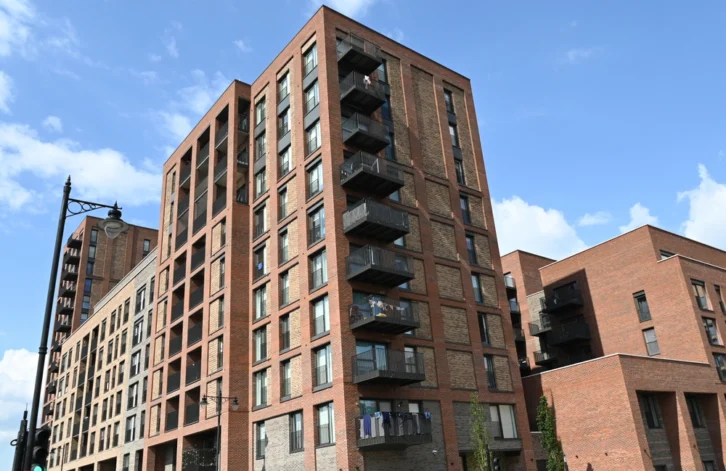
Record investment in UK Build-to-Rent is placing greater attention on how developments perform after opening. Investors are looking beyond the number of completed homes to the services residents use and the costs likely to emerge over the life of the property.
A household connection may support remote work, streaming, mobile gaming and access to a casino site, often across several devices. Online casino platforms add live video, account authentication and payment activity to that demand. Broadband has become part of the property specification rather than a service considered near the end of construction.
Record investment is putting asset quality under scrutiny
UK Build-to-Rent investment reached £2.2 billion in the second quarter of 2026, the strongest second quarter recorded. By then, investment for the year had already passed the totals reached by the end of the third quarter in each of the previous three years. Institutional owners generally treat rental developments as long-term operating assets, meaning small design decisions can affect hundreds of apartments.
Connectivity is a clear example. A weak signal in one flat may look like a minor fault, but repeated problems across a large scheme create complaints and place pressure on management teams. Digital leisure also changes what residents expect. Watching a live casino stream, moving between games or completing an account check depends on stable access rather than headline download speed alone.
Broadband availability now sits alongside storage, communal space and transport links when residents compare homes. Once they move in, they notice whether Wi-Fi reaches shared lounges, mobile coverage drops inside the building or the connection slows during busy evenings. These details increasingly shape how residents judge a professionally managed rental scheme.
Casino platforms highlight the need for reliable capacity
Ofcom reported in May 2026 that full fibre was available to 24.9 million UK homes, covering 82% of residential premises. Gigabit-capable broadband had reached 89%. National availability is expanding quickly, although a well-connected postcode says little about the final connection inside an apartment block.
Designers must provide equipment space, allow fibre to reach every apartment and arrange access for network providers. Coverage should also extend into co-working areas, gyms and lounges. Online casino platforms show why this planning matters. Live formats combine continuous video with account data and real-time interaction, while residents may be using several other connected services simultaneously.
Latency adds another consideration. A connection can advertise a high speed while responding slowly or inconsistently, affecting live casino games, cloud gaming and video calls. Operators therefore need to consider capacity, stability and coverage together. Testing an empty building provides only part of the picture because evening demand changes once hundreds of residents are online. Equipment and cabling should also allow future upgrades without disruptive work through occupied apartments.
Digital systems connect leisure with building operations
The same connection used for streaming or visiting an online casino may support the building’s operational systems. Residents can use apps to report repairs, reserve shared spaces or receive messages from management. Smart access systems control entrances, while connected parcel lockers reduce pressure on reception staff. When these tools work together, staff respond faster and residents receive clearer information.
A broadband outage may affect personal entertainment, digital access controls and maintenance reporting at the same time. Connected services also raise security questions. Casino accounts, resident portals and smart-entry systems all involve authentication, although the risks differ. Building-wide networks require proper separation between private resident internet services and operational technology.
The Build to Rent Alliance Code of Practice was launched at UKREiiF in May 2026 and is undergoing consultation and testing before formally taking effect. Its voluntary framework covers service quality, security, sustainability and governance. Reliable technology supports many of those areas, particularly communication, access and maintenance. Operators should start with a defined need rather than installing features simply because they are available.
Poor planning creates long-term management costs
Digital failures rarely remain confined to the IT budget. Weak broadband can affect home working, streaming and real-time entertainment such as live casino services. An unreliable access system creates extra work for reception teams, while disconnected maintenance platforms make repairs harder to trace. Correcting infrastructure after residents have moved in can also be disruptive and expensive.
Every scheme needs a different specification. A suburban rental development will not face the same demand as a city-centre tower with shared offices, lounges and hundreds of apartments. The design should reflect the location, resident profile and expected mix of digital activity, including how many devices may be connected at once.
Investors already examine lifts, heating, façades and energy systems when assessing long-term asset condition. Connectivity now deserves similar scrutiny. The growth of streaming, online casinos and other real-time platforms makes weak infrastructure easier for residents to detect. As Build-to-Rent investment rises, the ability to support those services reliably will play a larger role in resident satisfaction and operational performance.