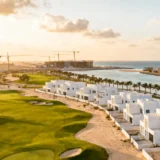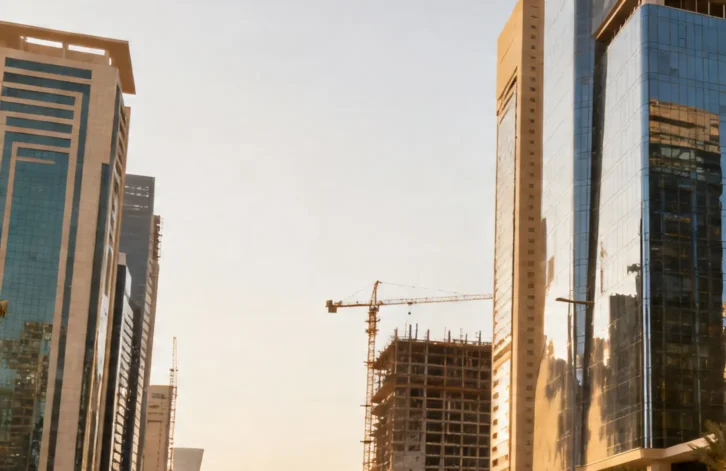
Saudi Arabia’s property market is attracting increased attention from regional and international investors as the country progresses through economic reforms tied to its Vision 2030 programme. The search for investment opportunities in the Kingdom has intensified as capital markets deepen and infrastructure spending continues.
The country’s investment appeal stems from several structural factors: a G20 economy with significant domestic demand, a young and growing population, sovereign-backed investment capacity, and an expanding private sector. Saudi Arabia is scheduled to host Expo 2030 and the 2034 World Cup, events expected to drive further development.
Real estate sector leads investment activity
Property remains a primary focus for many international investors entering the Saudi market. The sector benefits directly from the government’s transformation agenda, which includes city expansion, increased homeownership targets, and tourism infrastructure development.
Real estate investment in Saudi Arabia offers tangible assets with potential rental income and medium to long-term capital growth. Off-plan property purchases provide entry at launch-phase pricing with staged payment plans, though investors must assess developer credibility and district demand carefully.
The trend mirrors patterns seen elsewhere in the region, where Saudi Arabia’s off-plan market attracts foreign investors seeking exposure to emerging markets before full international recognition.
Riyadh and Jeddah dominate investment focus
Riyadh, as the capital, benefits from government policy support, regional headquarters migration, and financial sector growth. The city is experiencing population expansion and new transport infrastructure development. Investment themes include prime apartments near business hubs, family villa communities, and luxury branded residences, particularly in northern growth zones and heritage areas such as Diriyah.
Jeddah offers a different profile as the Kingdom’s Red Sea gateway. The coastal city benefits from international connectivity, tourism expansion, and waterfront development potential. Investors focus on waterfront apartments, branded residences, and central mixed-use communities.
Diriyah, blending heritage and luxury development, is positioned as a prestige district with limited supply. The area combines cultural significance with planned hospitality and residential components.
Alternative investment channels
Beyond property, Saudi Arabia’s capital markets provide access to listed equities across banking, energy, construction, retail, healthcare, and logistics sectors. The market continues to deepen, offering liquid instruments for investors preferring public markets to physical assets.
Business formation is also attracting entrepreneurs, particularly in real estate services, technology solutions, construction support, tourism businesses, and professional advisory firms. The government has streamlined processes for international business establishment.
Tourism and hospitality sectors are receiving substantial investment, creating opportunities in hotels, serviced apartments, and leisure assets as visitor numbers are projected to increase through 2030.
Market risks and considerations
Investment in Saudi Arabia carries standard emerging market risks. Key considerations include asset valuation in high-demand sectors, developer selection, regulatory frameworks, liquidity timing, and sector concentration. Market observers note that successful outcomes typically depend on timing within the development cycle rather than asset selection alone.
The performance outlook through 2030 varies by scenario. Conservative projections anticipate broad growth across housing and domestic sectors. Stronger scenarios suggest prime Riyadh and Jeddah real estate could outperform due to international demand. High-growth scenarios focus on tourism, luxury districts, and early-cycle strategic assets.
The Saudi market appears to be in a multi-year growth phase, with 2026 to 2030 considered a potentially significant period before the market achieves full mainstream global recognition. By 2030, analysts expect a larger private sector economy, increased global corporate presence, greater tourism flows, and matured premium districts.
Investment strategies vary by investor profile. Capital growth investors typically focus on Riyadh real estate and premium districts, while income investors may prefer Jeddah residential yields or dividend equities. Entrepreneurial investors prioritise business setup in growth sectors, and legacy wealth investors seek trophy real estate in landmark developments.
The diversification of Saudi Arabia’s economy away from oil dependency continues to create multiple investment channels, though property remains the most accessible route for many international investors seeking direct exposure to the Kingdom’s transformation.