Damp gets a survey section. Japanese knotweed gets a mortgage question. Woodworm gets a specialist inspection and a guarantee.
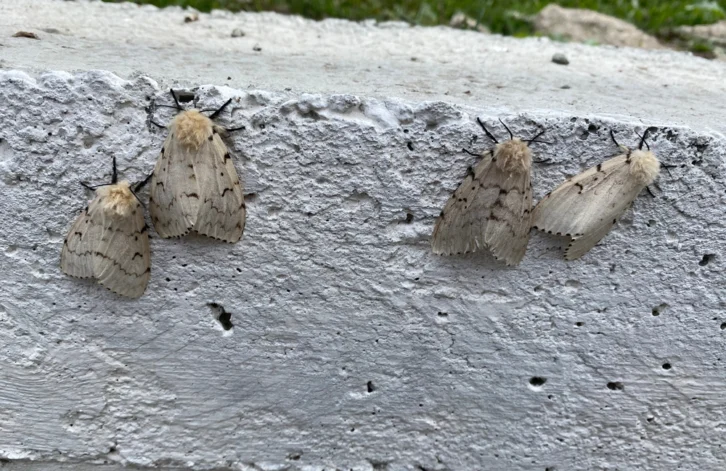
Moths get nothing. And that gap is costing buyers, landlords and agents more each year.
Clothes moth and carpet moth infestations have risen steadily across the UK for over a decade, with warm homes, mild winters and wool-rich interiors driving populations to levels heritage bodies describe as record-breaking. Yet moths remain almost entirely absent from the standard due diligence that surrounds property transactions and management. For an industry built on identifying hidden defects, this one is hiding in plain sight, usually about two inches from the skirting board.
Why moths are a property problem, not just a contents problem
The instinct is to file moths under contents: holes in jumpers, the owner’s problem, nothing to do with the asset. The case-bearing carpet moth disagrees.
Its larvae feed on keratin, the protein in wool and other natural fibres, and fitted wool carpets are their habitat of choice. They graze from the room edges inward and under furniture, exactly where viewings, inventories and even RICS surveys rarely look. The damage is real, progressive and attaches to the property itself:
- Wool carpet replacement runs £30 to £60 per square metre before fitting, so a well-carpeted period house can be carrying a four-figure defect that nobody has priced
- Larvae also establish in floor voids, under fitted wardrobes and behind skirting, surviving superficial treatment and re-emerging after completion or check-in
- In flats, terraces and HMOs, infestations travel through shared voids and communal areas, making them a building problem rather than a unit problem
None of this appears on a standard homebuyer report. Carpets and floor coverings sit outside most survey scopes, and an infestation at the quiet stage is invisible to anyone not parting the pile at the room edge.
Where it bites in practice
Sales. The classic pattern: a furnished period property, sold with heavy furniture in place, completes; the buyers move that furniture and find grazed tracks across the wool carpets. The infestation predates the sale, but proving when it began is close to impossible, and the remedy conversation happens after money has changed hands. For sellers, the reverse risk applies: an infestation discovered during a transaction gives buyers a renegotiation lever out of proportion to the fix.
Lettings. Moth cases are a growing feature of deposit disputes precisely because origin is unprovable. The tenant blames inherited infestation; the landlord blames the tenant’s stored textiles; the adjudicator looks for whoever has the better paper trail. Without dated inventory photographs of carpet condition, including edges and under furniture, that paper trail usually doesn’t exist.
Block and HMO management. One untreated unit reseeds its neighbours indefinitely through floor voids and communal carpet runs. Managers who treat units in isolation buy six-week pauses rather than solutions, and the recurring cost lands in the service charge to everyone’s irritation.
Refurbishment and furnished stock. Landlords who specify wool carpets for premium lettings, and operators of furnished and serviced stock, are effectively stocking the larder. Vacant periods make it worse: empty, heated, undisturbed rooms are ideal breeding conditions, which is why infestations so often surface immediately after a void.
The due diligence that closes the gap
The fix isn’t exotic. It’s the same discipline the industry already applies to damp and timber, scaled to a smaller, cheaper problem.
- Inspect at the transaction points. Before listing, before completion on furnished stock, at check-in and check-out, and during void periods. The method takes minutes: part the carpet pile at room edges and under furniture and look at the base for grazing, larval cases like rice grains, silky webbing and gritty debris.
- Photograph and date what you find, and what you don’t. For lettings, edge-of-carpet condition photos in the inventory are the single most effective dispute-prevention tool available. Most moth arguments dissolve against a dated image of intact pile.
- Monitor cheaply. Pheromone traps cost a few pounds, catch adult males and turn an invisible risk into a data point. In managed blocks and furnished stock, a trap per unit checked at routine visits is trivial to administer and gives early warning at the stage when treatment is a footnote.
- Treat properly, once, when something’s found. Moth biology punishes half-measures. Eggs, larvae, pupae and adults are present simultaneously, so surface spraying kills the visible generation while the next matures out of reach, and the “resolved” infestation returns within weeks. Established or recurring cases justify moth eradication specialists rather than a generalist contractor, because outcomes turn on specifics: identifying the species correctly, treating voids, stored textiles and hidden harbourages as well as the visible carpet, and timing follow-up visits to intercept eggs that survived the first pass. For landlords and managers, specialist treatment reports also do double duty as evidence, for deposit adjudication, service-charge queries and future transactions alike.
- Specify with the pest in mind. Where carpets are being replaced anyway, man-made fibres are effectively moth-proof. Plenty of landlords now reserve wool for rugs that can be inspected and cleaned, and fit synthetics wall to wall in rental stock. It’s a small specification decision that removes the food source permanently.
The asymmetry worth acting on
What makes moths unusual among property defects is the gap between prevention cost and failure cost. Monitoring is minutes and pennies. Professional treatment of an established infestation is hundreds of pounds. The failure modes, renegotiated sales, deposit adjudications, recurring block-wide infestations, wholesale carpet replacement across a furnished portfolio, run to thousands, and arrive with reputational friction attached.
Risks shaped like that get managed everywhere else in the industry. Moths have escaped the treatment only because the damage accrues quietly, at floor level, in the rooms nobody checks.
The populations aren’t declining, the wool isn’t going anywhere, and the first party in any transaction to look under the furniture usually ends up holding the advantage. For agents, landlords and managers, twenty minutes with the carpet edges before the next listing, check-in or void inspection is the cheapest due diligence going. The alternative is learning about the infestation the way most of the industry currently does: from the buyer’s solicitor, the tenant’s deposit claim or the service-charge meeting, at which point the moths have already eaten the margin.